

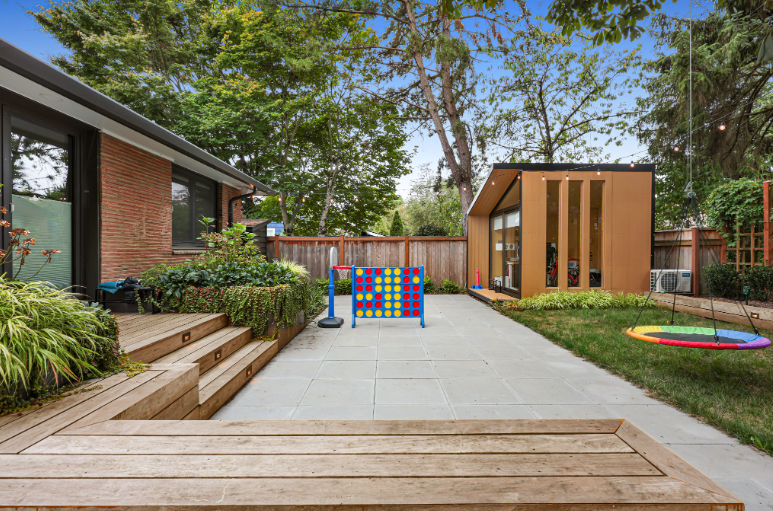
Families change fast. One minute you’re shepherding your toddler’s first steps, and the next you’re giving curfews and coaching for driver’s tests.
While your family is growing and changing, your outdoor space should be able to meet you in whatever season you find yourself.
Designing for families is something we’re especially good at. Let’s take a look at what a family-friendly outdoor space could look like for you.
Many people think family-friendly landscape design means kid-centric. It may bring to mind the image of big play structures, turtle sandboxes, and trampolines.
While family-friendly landscape design does indeed take into account the needs of every member of the family, the heart of family-centric design is adaptability.
Kids outgrow things really fast. Yard toys may be deeply exciting to them for a year or two, and then they’re on to something else.
Yards, on the other hand, are fixed. They don’t change constantly. They need to be landscaped intentionally so you are not stuck with child-centric structures for decades, while your kids have long since moved on.
Done well, your landscape should be designed once and adapted many times. This means planning for every phase of family life, from stomping in mud puddles to teenage hangouts, all the way to empty nesting.
Here’s what that looks like practically.
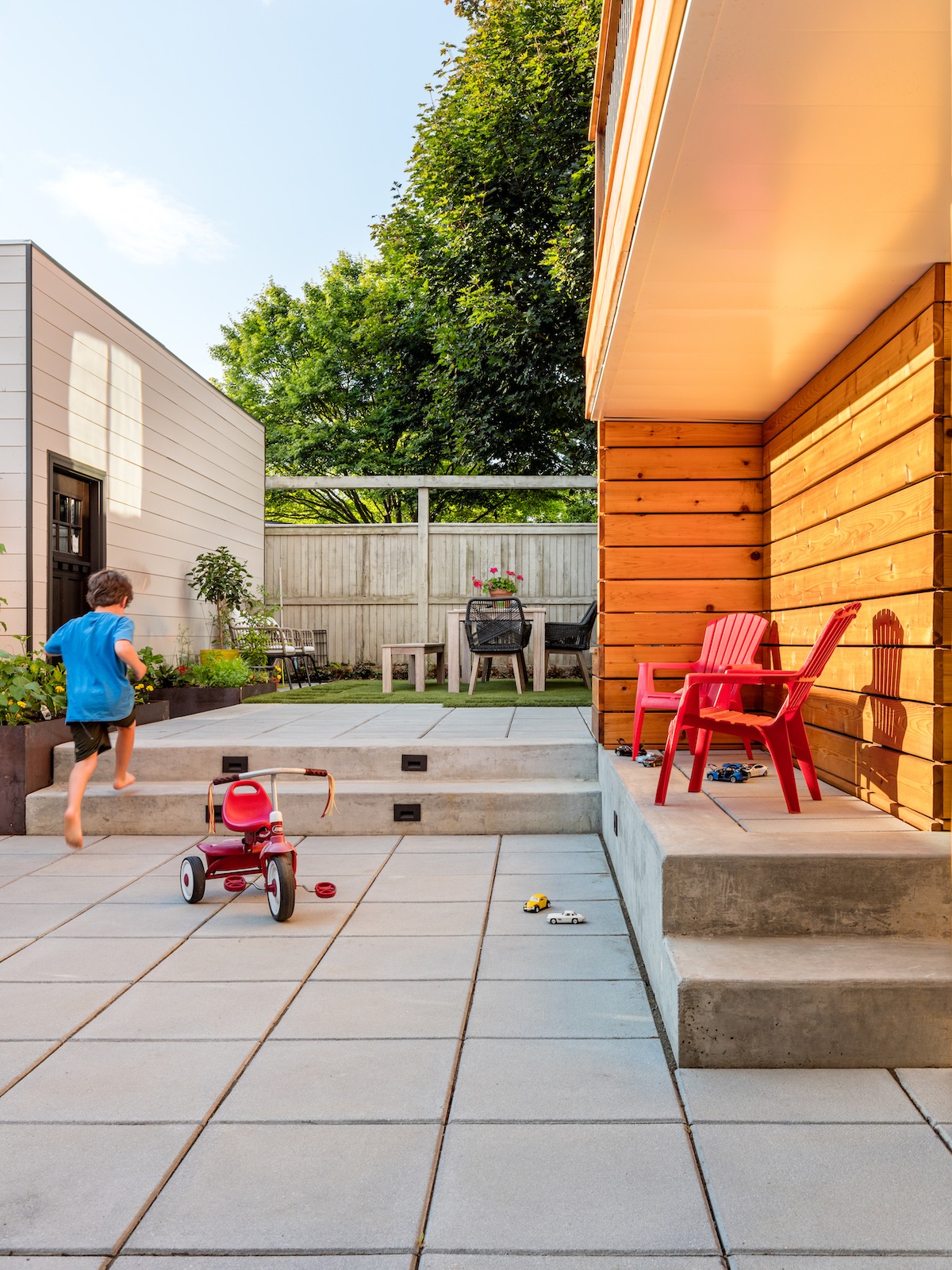
Here are some examples of how the same design can be adapted for your changing family again and again.
The emphasis of design in the early years is on safety and simplicity. You want clear sight lines to keep an eye on your little ones and opportunities for engagement with the space that are safe and age-appropriate.
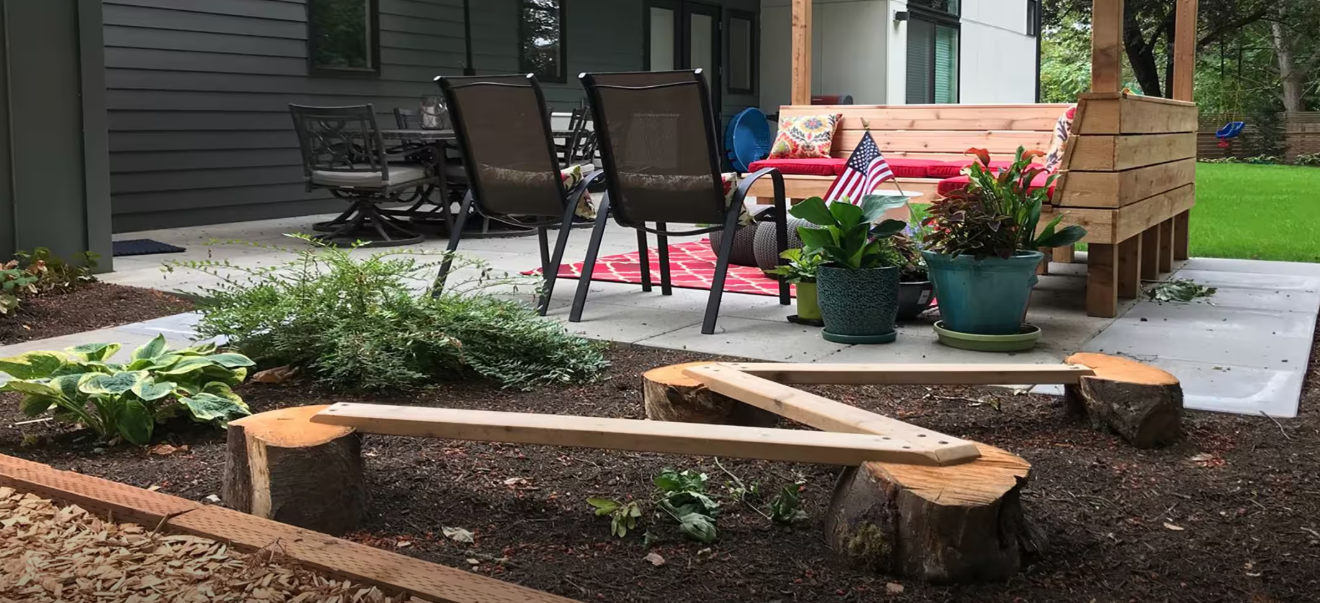
Logs and stumps are eco-friendly, low-impact, and perfect for climbing, learning balance, and improving coordination. They can be used as seating for grown-ups and teenagers, balancing beams for elementary age children, and are an element that will age beautifully after all the little ones are grown.
Pathway loops are a lovely feature for any garden, and they’re a big hit with little ones for pushing toy cars, riding tricycles, playing hopscotch, or anything else their imaginations can conjure. Later, they can also be used for patios or seating areas, making them highly adaptable for parents of older children or empty-nesters.
Arbors are beautiful structures that can support climbing plants and create a shaded enclave, making them a gorgeous feature all on their own. But they also provide structural support for swings. You can begin with a toddler swing and swap it out for a tire swing when your children are older, and finally install a bench swing for outdoor family or couple time as your family changes.
As your children get a little older, the way they interact with their outdoor space will change. Here are some of the ways we’ve designed adaptable yards with elementary-aged children in mind.
Forts are a staple of every childhood. An adaptable approach to forts is to design them in such a way that they can be used for smaller children (accessible doors and windows), elementary-aged children (forts, clubhouses, hideouts), and teenagers (a private third-space to make their own or to spend time with friends).
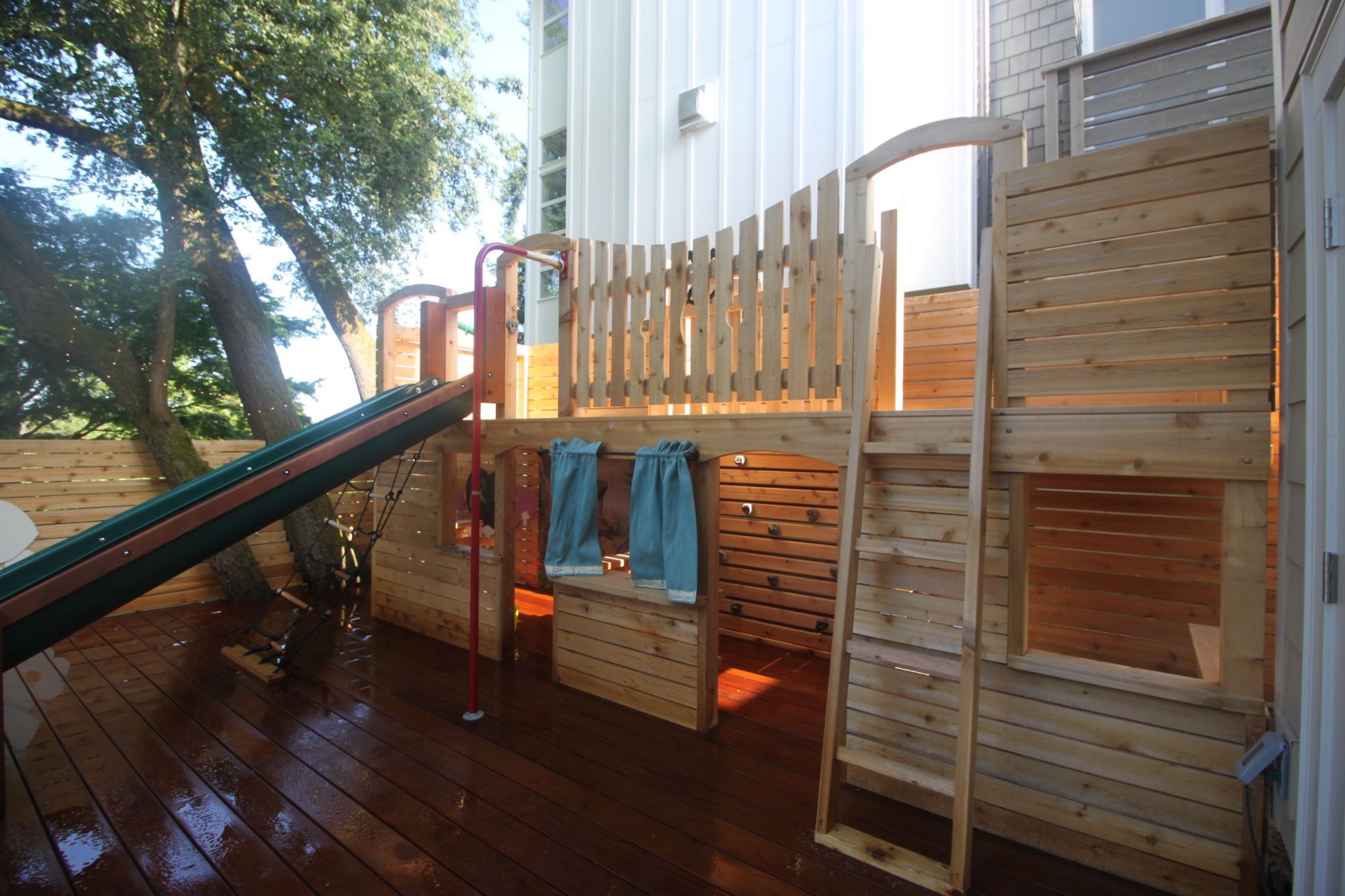
After the kids have left the nest, their fort can be transformed into a storage shed, office, or creative workshop.
Nooks are little hideaways designed to wrap around a particular space, forming a cozy little corner that feels sheltered from the rest of the yard.
Nooks can contain harder, more formal surfaces like gravel or pavers, or hold softer, more walkable ground covers like fleur de lawn or clover. This is a great option if you don’t want to build an entire structure but still want the family to have an area that feels like a protected getaway.
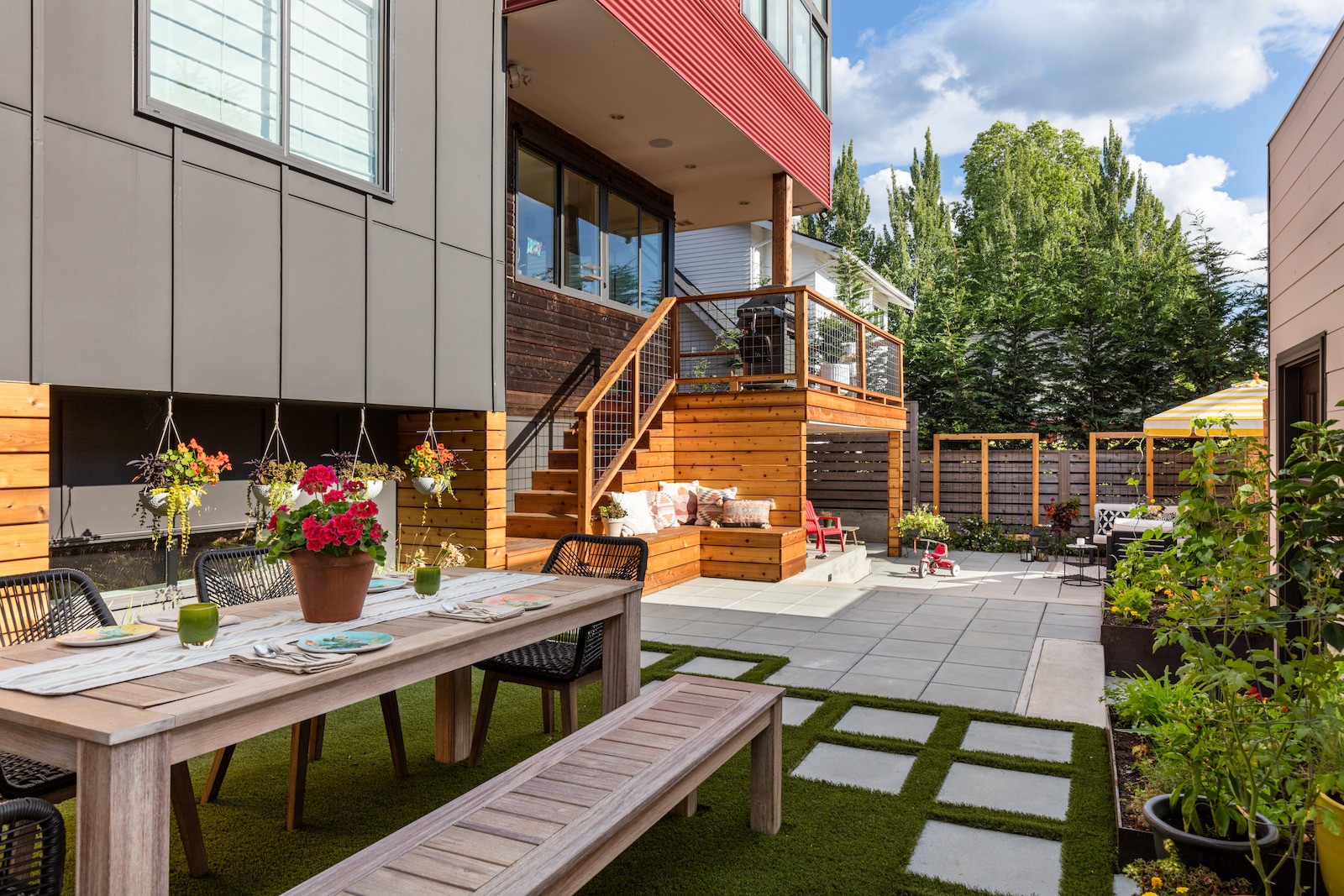
Sports lawns are a great option for longer, more narrow yards that at first may seem like a handicap to a functional, family-friendly space. Sports lawns can be plugged into your design and give your children space to run, play catch, soccer, and tag, or pitch a small tent for a backyard campout.
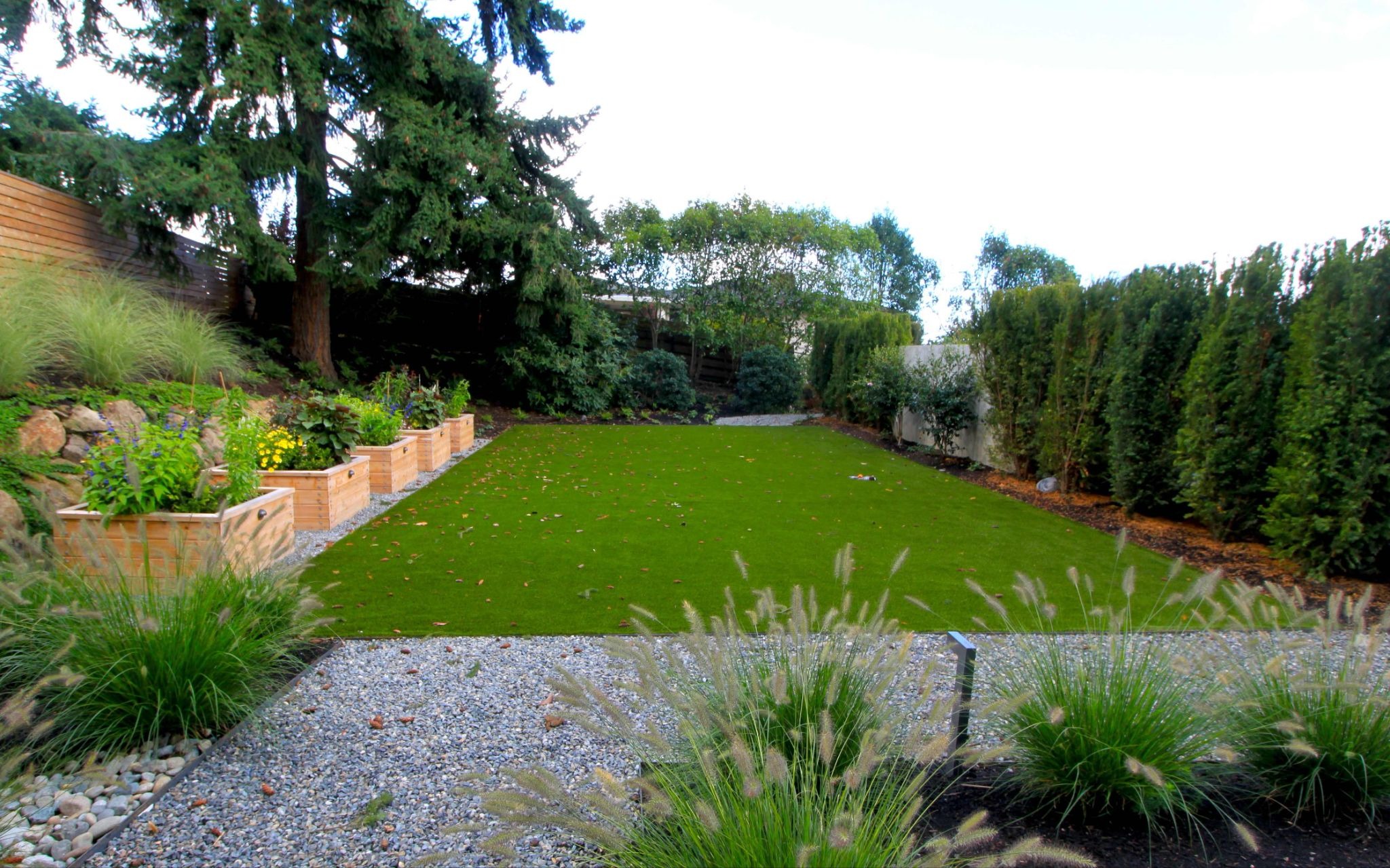
To conserve water, your design can include alternative lawns like fleur de herb or fleur de flower. Kids love alternative lawns for their lush, soft grass and easily-picked wildflowers.
Lawn is also very easy to tear up and replace with something else later, once the kids aren’t using it anymore. Your sports lawn could become a patio, vegetable garden, or entertaining space once the kids have flown the nest.
For teens, the needs of your yard change again. Young people tend to flock towards gathering spaces where they can spend time with their friends or private, more secluded areas where they can be alone.
Here’s how your yard can be what they need.
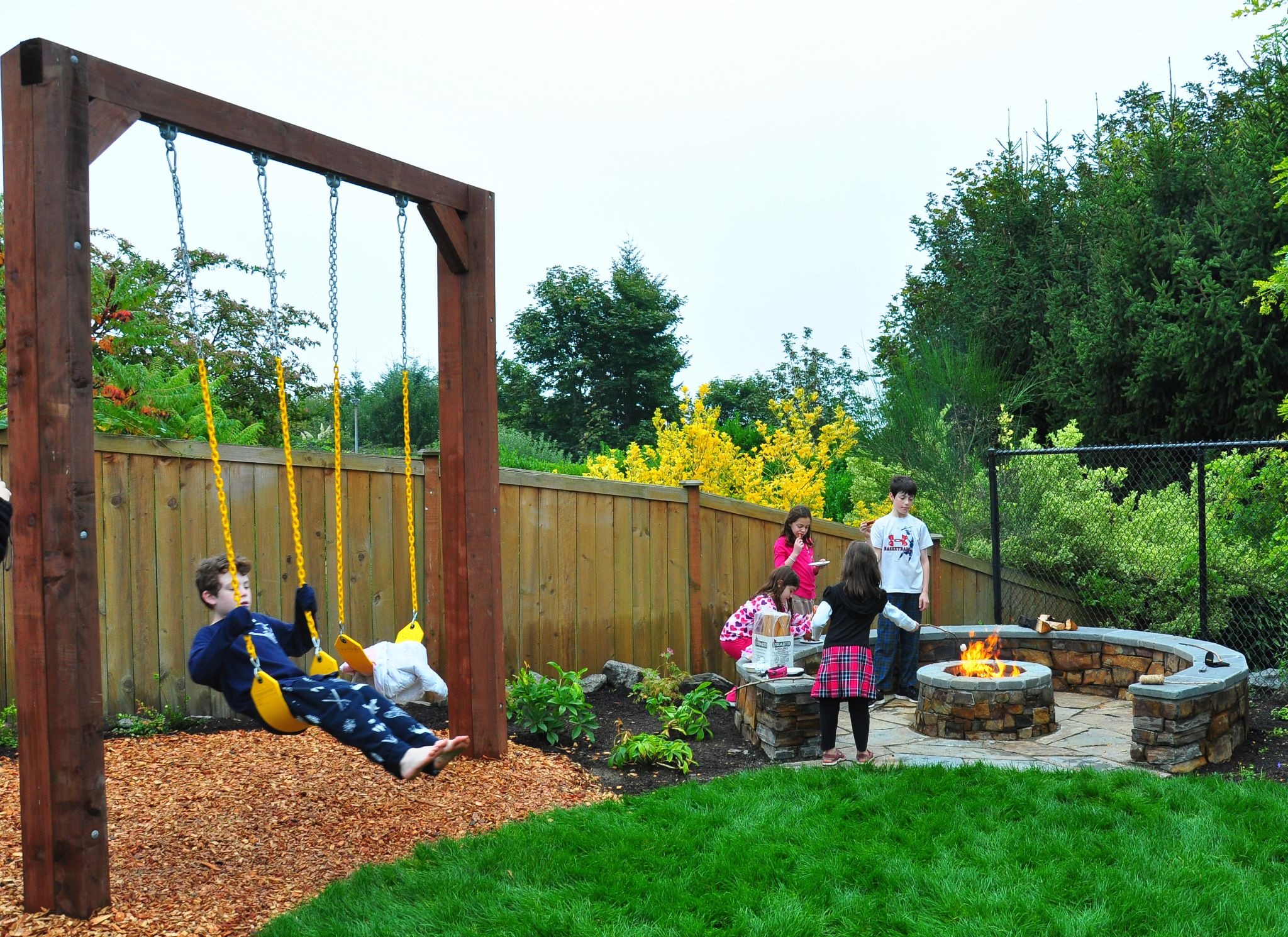
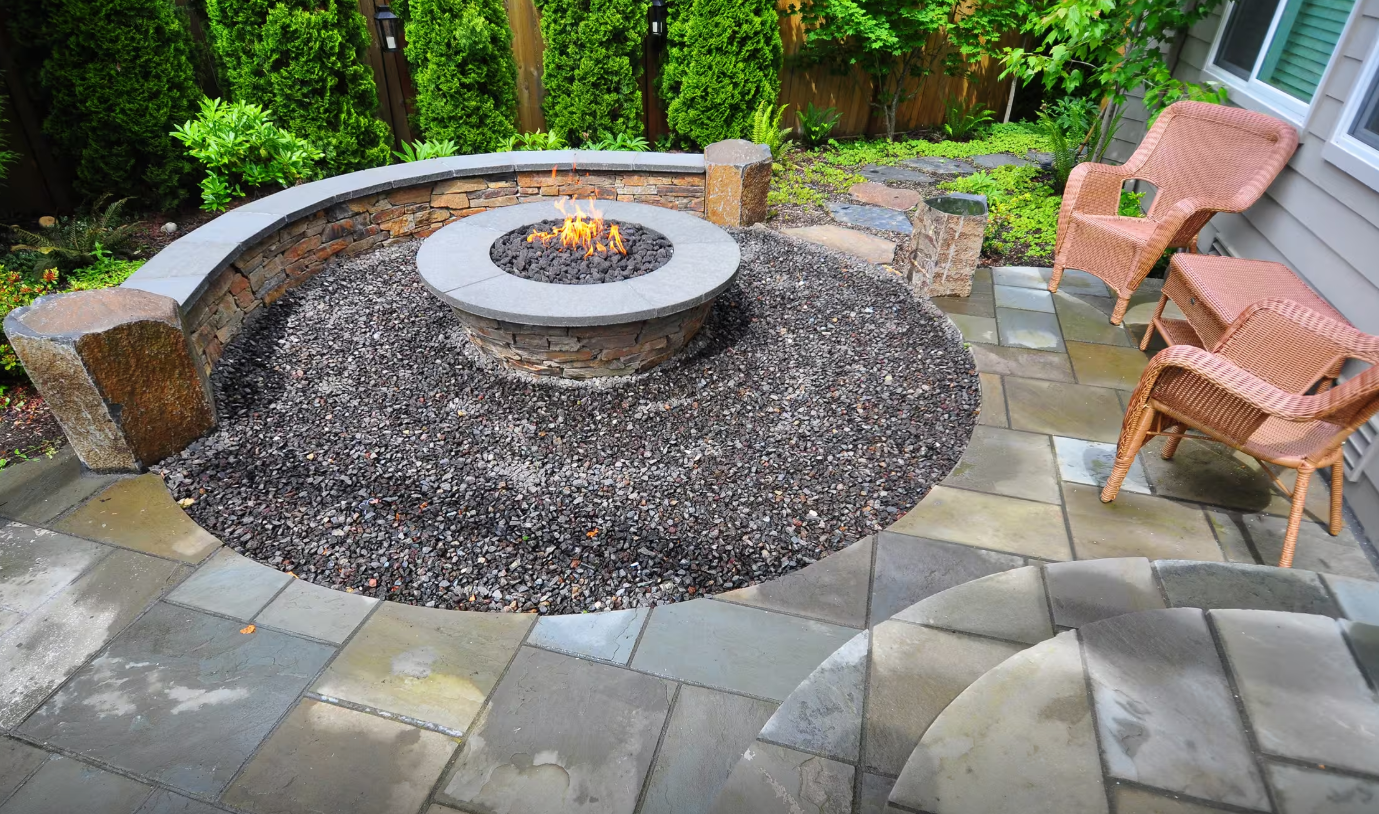
Fire pits are huge hits with teens and are also great for general entertaining. Built-in seating offers beautiful aesthetics without the clutter of lots of lawn furniture, and can also add additional nooks to make teens feel secluded and separated from the main house.
Hammocks are another use of the arbor structure we mentioned before, and create a cozy lounging area for the whole family, including teens. Hanging egg chairs are another option for teens to crawl into, read, nap, study, or scroll, all while soaking in fresh air and sunshine.
The adaptability of family-friendly landscape design goes beyond the structures in your yard. Adaptability also extends to maintenance, how and where you put your plants, and having a good strategy to keep things aging well with minimal effort.
A major player in long-term maintenance for family-friendly landscapes is in material selection
Slip-resistant materials, like luna wood, are safer for little running feet, are preserved without harmful chemicals, stay cooler than tiles or pavers, and require less maintenance over time.
Newer options like heat-treated wood offer exceptional longevity without chemical treatments, making them safer for families and far easier to maintain.
These materials resist rot and insects, don’t require regular staining or sealing, and naturally weather beautifully. While they may cost more initially, they significantly reduce ongoing labor, replacement, and exposure to harsh cleaners. These benefits really add up over time, balancing your investment with less worry and a lot less upkeep.
Planting design is another major factor in long-term maintenance. A well-considered planting plan accounts for the full mature size of plants, spacing them appropriately from the start so they can grow into their space without constant pruning.
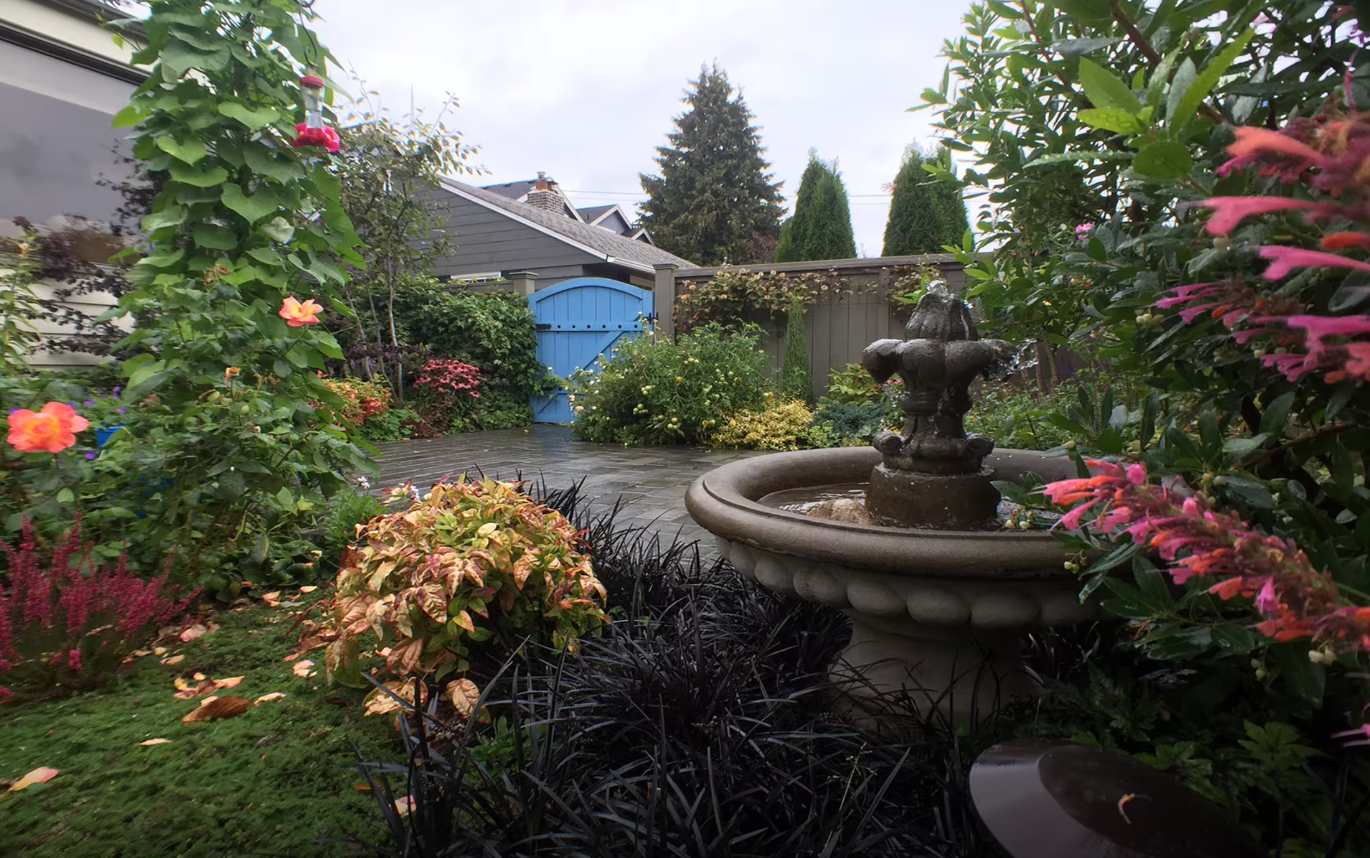
Every garden requires some care. It is, after all, a living system that needs water, mulch, and nutrients. But choosing plants that are truly suited to your yard’s sun, soil, and moisture conditions dramatically reduces the need for intervention.
When plants are thriving where they naturally want to be, you’re not constantly compensating with extra water, fertilizer, or corrective pruning. This is where the deep, specialized horticultural knowledge of professionals pays off; thoughtful analysis up front leads to a landscape that largely takes care of itself over time.
Your landscape should be an investment that meets the needs of your family in every stage of life.
Thoughtful and adaptable design choices make future changes simpler and more cost-effective. Creating structures that are versatile and serve several functions, choosing materials that don’t require frequent replacement, and plantings that thrive naturally in their environment all reduce the ongoing maintenance burden on busy families.
We believe the best landscapes are built with intention, craftsmanship, and an understanding of how real families live.
If you’re ready to invest in a family-friendly landscape design that will thrive five, ten, or twenty years from now, we’d love to help.
Let’s start a conversation about creating an outdoor space that grows with you, beautifully, safely, and for the long haul.