

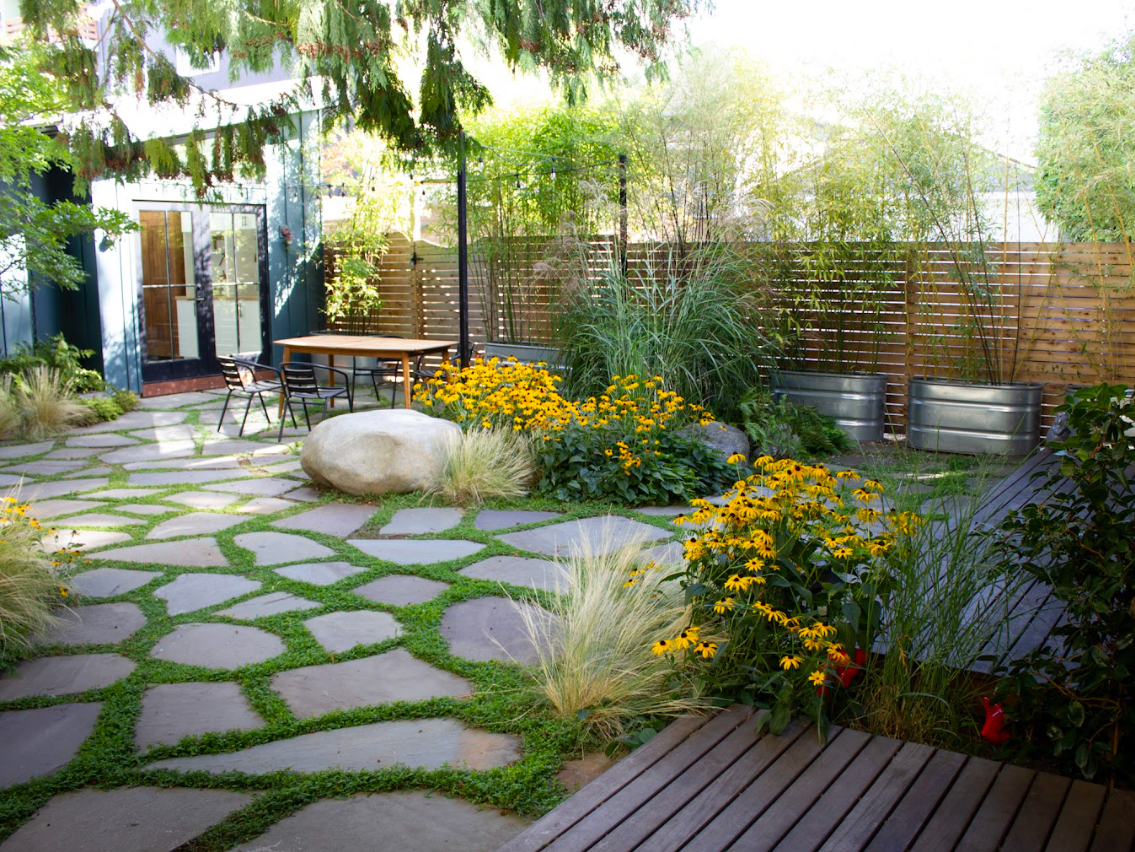
Sustainable landscape design plans for longevity. Our lives change, our needs change, and biological structures are constantly changing. Sustainable landscape architecture understands this and is designed to work with the flow of life, not against it.
For our climate, that means working with the rain for smart drainage and rainwater management and taking advantage of every sunny day we have.
You may have questions about how sustainable landscape design works functionally and if it’s the right approach for your family’s outdoor space.
Let’s take a look at what designing sustainably means for families and how you can approach your next project with longevity in mind.
The challenge of sustainable landscape design is to create spaces that are beautiful and durable. You want the aesthetic landscape of your dreams, but the reality is that it also needs to survive pets, mud, and soccer balls.
It’s a common misconception that “sustainable” means “less functional,” or “unrefined.” The assumption is that anything good for the environment is bad for efficient use, but that simply isn’t the case.
Sustainable landscape design is the thoughtful, intentional craft of designing gardens that work in alignment with nature. They conserve water, reduce waste, and support local ecosystems. The cherry on top is that sustainable landscapes usually require less maintenance overall because they mimic naturally occurring processes, making your garden more self-sustaining.
The City of Santa Monica proved this with a nine-year study (2004-2013) of water use, maintenance hours, and maintenance labor costs between a traditional garden and a California native plant garden.
They found that the native garden produced 56% less waste, required 68% fewer maintenance hours, and used a whopping 83% less water.
That’s a win-win any way you slice it.
But what does sustainable landscape design look like functionally in our climate?
Here are some examples of what it might look like for your family:
Functionality, durability, and beauty can absolutely co-exist. The data shows it, and we see it in the gardens we build every day. (Take a peek at our portfolio for some examples.)
Whether starting your Seattle landscape design project sounds completely overwhelming or very exciting, there are a few things you should think through before you get started.
It’s really easy to get lost in daydreams of your perfect garden and lose sight of how it needs to function day-to-day.
Before you build too many castles in the sky, sit down with a pad and paper and think through:
Once you get clear on how you use your outdoor space and how you would like it to function ideally, you can set your priorities.
It’s likely not everything on your wish list will fit into your budget, but many things are possible with a good strategy and thoughtful design.
So write down:
Having your wants, needs, and priorities straight is an excellent place to begin your sustainable landscape design project.
We’re just a phone call away to help you think through all of the elements of your family’s outdoor needs. Give us a call if you want to chat about your project.
A large part of family-friendly design is the selection of plants and materials.
Our designers are really good at this. It’s our job to make sure all of your family’s needs are met with your design, but it’s helpful to think through some things for yourself too.
When thinking of your dream space, consider:
Focus on native plants that aren’t delicate. You’ll have children and pets running around and on them and they need to be able to take a hit and not disintegrate.
Non-toxic plants are also essential for any four-legged members of the family sniffing around or small children who have a habit of grabbing anything in sight and pushing it into their mouths.
You also want to avoid anything thorny, sappy, or irritating to the skin. Your garden should be a safe oasis that everyone of any age can safely enjoy.
A well-chosen sustainable design material welcomes muddy boots, spilled popsicles, and the daily thump of basketballs without looking tired after a single season.
Natural stone, decomposed granite, and high-quality concrete develop character over time, while cheaper woods can splinter, warp, or demand constant refinishing.
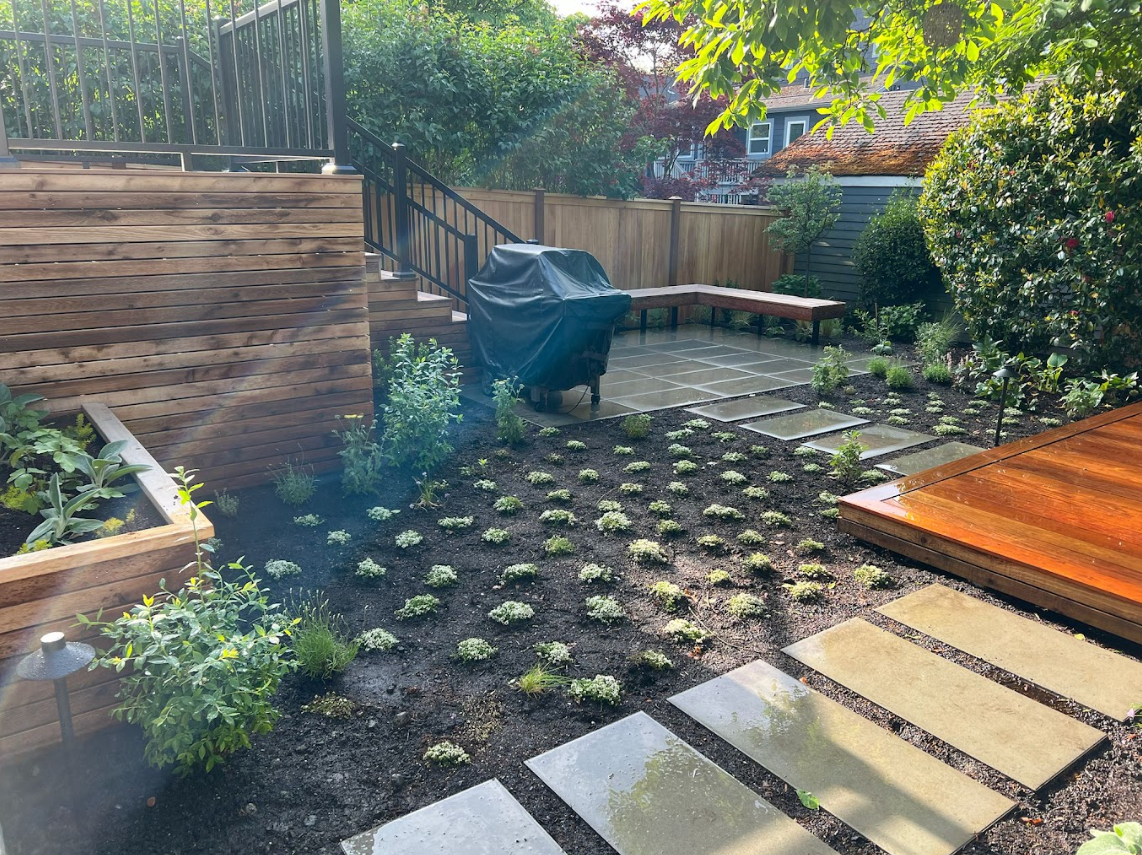
We mentioned permeable pavers earlier, and they are a great example of form meeting function. They create smooth, stable surfaces for scooters, strollers, and hopscotch while also doing the hard work of managing rainwater beneath your feet.
Instead of sending runoff into the street, these systems allow water to soak back into the soil where it belongs. For families, that means fewer puddles, safer play, and a driveway or patio that still looks sharp in the gray damp of February.
Your backyard does not have to look like a neighborhood playground in order to have interactive and engaging play spaces for your children.
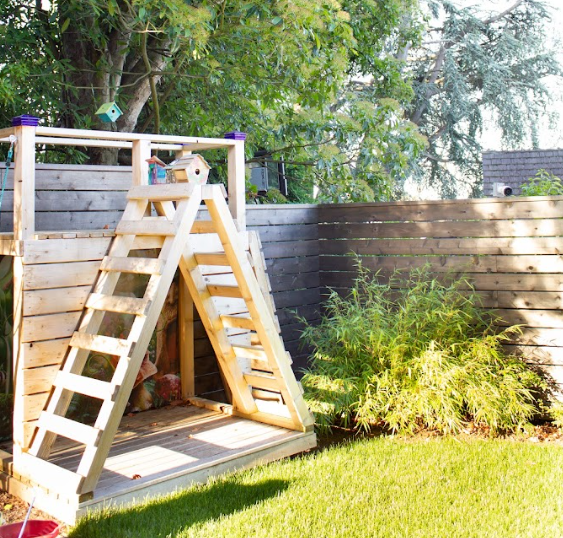
Kid-friendly backyards are really easy to integrate into sustainable landscape design. Instead of a single bulky, plastic play structure your kids will outgrow in three years, sustainable landscape architecture offers things like:
Working with your natural landscape offers so many incredible options for healthy and safe outdoor play for your children. Our in-house Seattle landscape architects and designers use their creativity to do this beautifully. See some of their work in our portfolio.
When it gets right down to it, kids will be kids and Seattle will be Seattle. A good garden design will plan for both.
Sustainable landscape design allows you to have everything you need and want in your outdoor living space without making compromises on durability, functionality, or safety.
We’d love to hear about your dream project. When you’re ready, reach out for a free 15-minute phone consultation and we’ll talk next steps.