

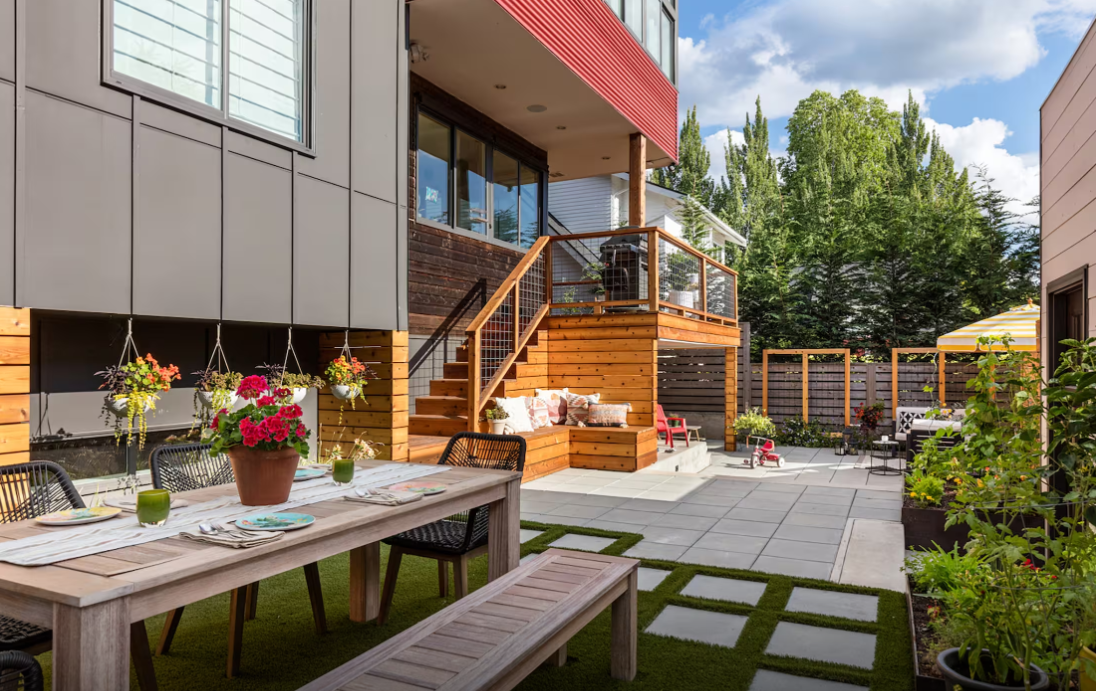
Every Seattleite knows that if we waited for the weather to be perfect before going outside, we’d be trapped indoors nearly all year.
Outdoor living spaces in Seattle are essential for enjoying your yard year-round and having a beautiful, comfortable entertaining space to spend time with the most important people in your life.
In our decades of building and designing quality, custom landscapes, we’ve dialed in on the most important elements of excellent outdoor living spaces.
Let’s take a look at each detail and how it may apply to your outdoor space.
General advice for outdoor living spaces usually isn’t helpful for folks who live in Seattle. Our average rainfall is 37-39 inches per year, falling in a near constant drizzle. Our summers are short and dry, so we’re dealing with a lot of damp most of the time and a lot of dry some of the time. This means your outdoor living spaces need to be thought through carefully to be usable throughout the year.
Good design is all about working with your unmovables—climate, yard size, natural fixtures—and really getting them to work for you.
Here’s how we approach smart outdoor living spaces:
Nothing cuts a beautiful summer afternoon short faster than an outdoor space that traps heat.
While overhead structures are essential for shade and rain coverage, a poorly designed structure can work against you in summer. Low ceilings, enclosed walls, and dense overhead materials can trap warm air and turn a shaded patio into an uncomfortable pocket of stagnant heat.
Good design accounts for airflow. Structures with open or semi-open sides let cross-breezes move through rather than stall. Ceiling height matters too. A generous overhead clearance keeps warm air moving above you, not trapped in the space with you.
The goal is a structure that gives you shade without sacrificing the breeze, so your outdoor space stays comfortable even in a heat wave.
A little rain is not a problem and doesn’t put most of us off from doing whatever we have planned for the day, but even the most weathered Pacific Northwest resident is not likely to sit in the rain on an uncovered patio.
Without overhead coverage, your outdoor living space will be mostly unusable from November to April.
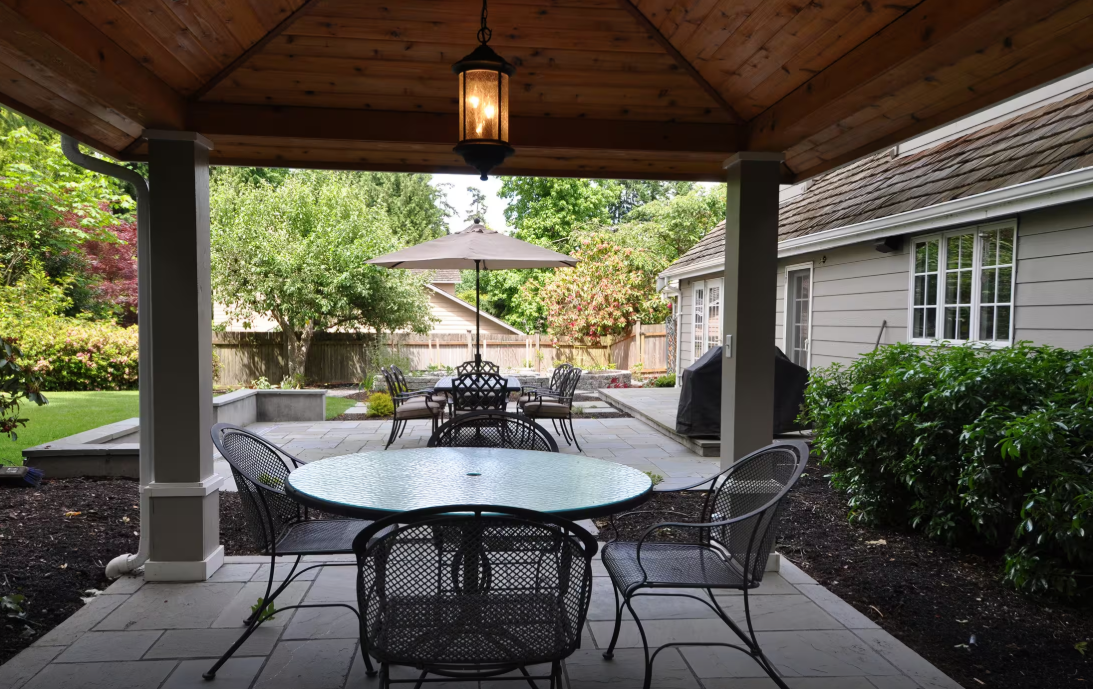
A pergola with a louvered roof, a full-coverage pavilion with a standing seam metal roof, or even a sail shade with a steep enough pitch to shed water turns the same square footage into an entertaining and living space you can use even on a drizzly October evening.
There’s an art to catching good sun exposure. It’s not simply a matter of putting up a structure and waiting for the sun to find it before running outside to soak up all you can.
Seattle’s winter sun stays low on the horizon, peaking at only 20 degrees compared to its summer height of 66 degrees.
This means that an entertaining space that is in direct sunlight on a June afternoon may be shadowed by surrounding houses or structures during the winter.
Knowing when and where shadow falls will determine if your entertaining space is warm and inviting, regardless of the season, or shadowy and cold.
Perpetual moisture means rot, algae, and slippery surfaces if structures aren’t built for Seattle’s climate.
Durable materials are the difference between a safe, effective, entertaining outdoor space that lasts years and a dangerous, expensive headache waiting to happen.
Materials like brick and untreated wood are usually not good choices for durability. Wood rots, and bricks are slippery.
Concrete, natural stone, and coated steel handle the weather, are easy to clean, and don’t require a lot of maintenance as the years pass.
The ultimate outdoor entertainment and living space isn’t just about the technicalities of the design. Your experience of the space is also extremely important. The most impeccably built space with the finest materials won’t mean anything if you don’t enjoy spending time there.
After hundreds of builds and designs, we’ve come to believe flexibility, comfort, and refuge are three of the most crucial elements for good outdoor design.
Let’s look at each of them more closely.
Flexibility in your design means your space is versatile, able to function however you need it to on any given day in any given season.
Adaptable space lets you fold up a table in exchange for seating, or throw down a rug for floor space so your little ones can play.
Flexibility in overhead cover allows you to flow with the weather, rolling up sun shades when it's cloudy out, and pulling them down to offer shade in direct sunlight or cover from rain.
The goal of your outdoor living space is that you can truly live in it. Our lives as humans are ever-changing, and our spaces need to change with us. A good, flexible design will move with you, being anything you need it to be.
Think of your outdoor space as an extension of your indoor space. What do you need to feel comfortable when you are inside? We can integrate more of those elements outside than you may imagine.
Integrated heating has become a popular addition to outdoor spaces, since so much of our year is cool. Heat can come from electrical units placed strategically throughout your structure or from a fire pit that’s beautiful and easy to gather around.
Lighting is another element that makes the outdoors feel homey. Soft, ambient light, or stronger overhead light illuminates any party or activity you may use your space for.
Connecting the indoors to the outdoors is also important. Think about the paths to and from your house. You should be able to move between the spaces comfortably, in bare feet, and without fear of tracking in mud or gravel.
Lit pathways also allow you to move between the spaces safely, and illuminated paths offer a soft, mystical glow that entices you forward.
That leads us to our final element: refuge.
In 1975, a British geographer named Jay Appleton coined a term he called the Prospect-Refuge Theory. The idea is that humans evolved to feel most comfortable in environments where they have a clear view looking outwards and a refuge at their backs. Appleton’s theory is that this preference evolved from our ancestors living in caves, when we needed to scan for danger and food while still having shelter from predators.
Our psychology also enjoys glimpses of things rather than seeing them all at once. The Zeigarnik Effect is a psychological phenomenon that creates a cognitive tension around unfinished business. In landscape terms, this means what you can’t see creates attraction towards wanting to complete the total mental picture.
Curved pathways and layered plantings give you this intuitive pull towards your garden, offering an enticing glimpse of what lies beyond, prompting you to want to get outside and explore your space.
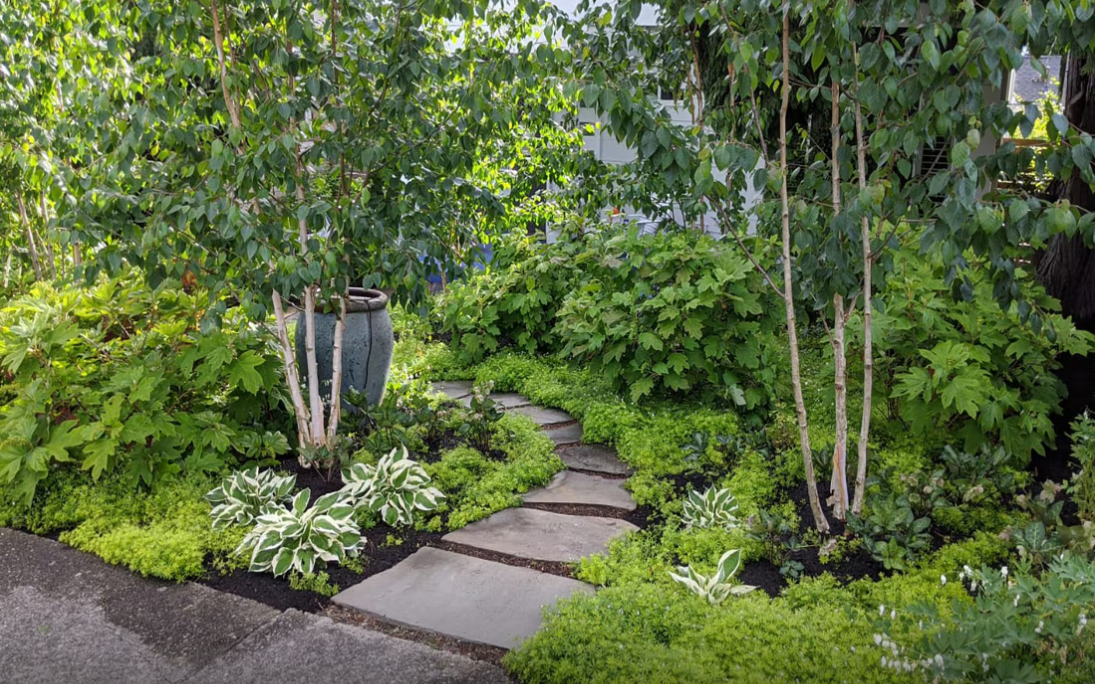
You can design for these physiological preferences both from indoors, looking out, and from your outdoor space, looking in.
Your outdoor living space design can be nestled among hedging, established trees, or constructed boundaries that give you a sense of refuge while still offering a clear view of your garden's beauty.
Exceptional landscape design is about so much more than looks. It’s about durability, flexibility, and enjoyment. Your landscape is an investment in your relationships as much as your property. An outdoor living space gives you a refuge to connect with nature, your neighbors, your family, and your friends in the way only Mother Nature can.
We excel at translating visions into reality. Our team of expert designers makes your project all about you. Our job is to listen and communicate so you understand all of your options.
If you’re ready to start the conversation, reach out! We’re just a click away.