

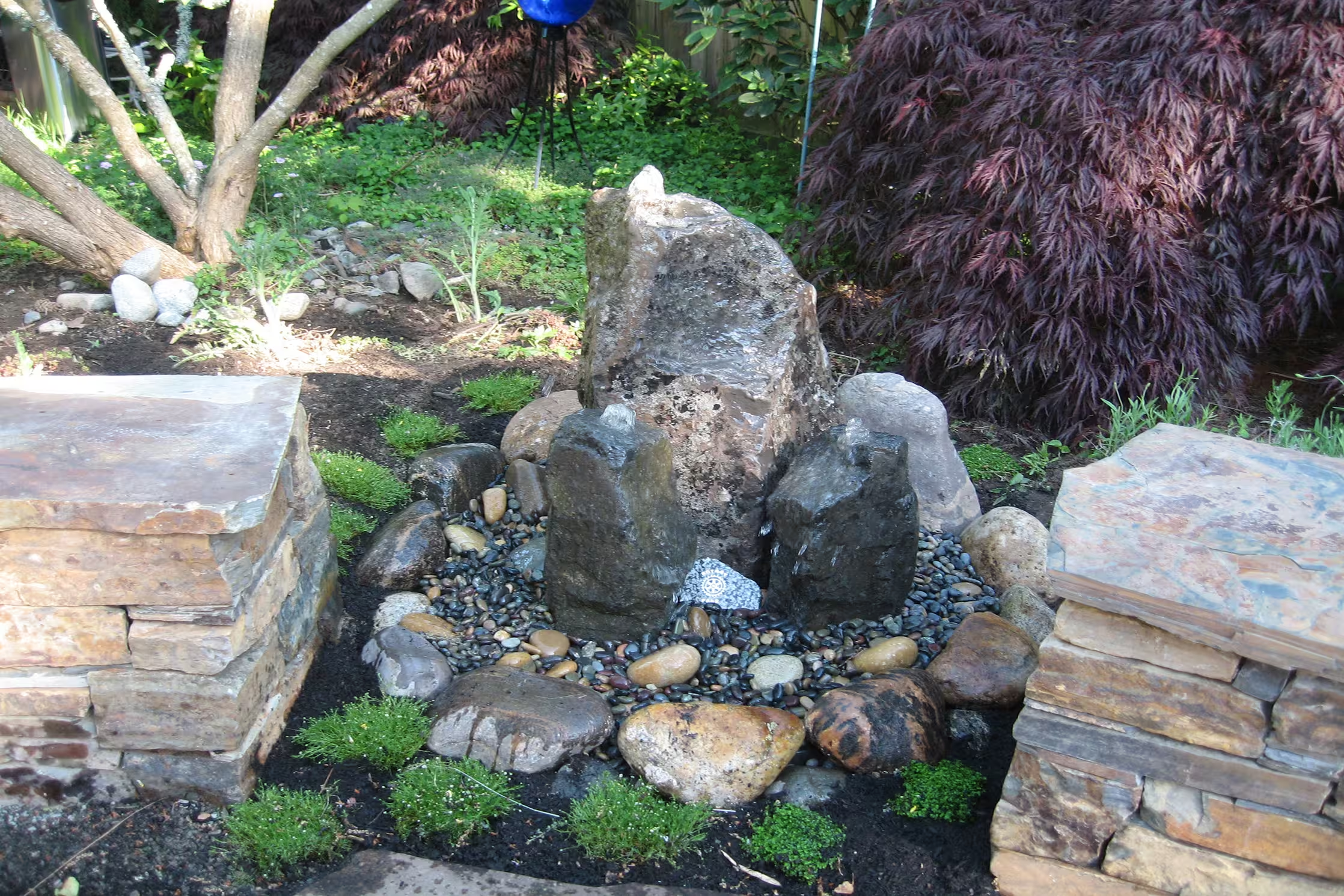
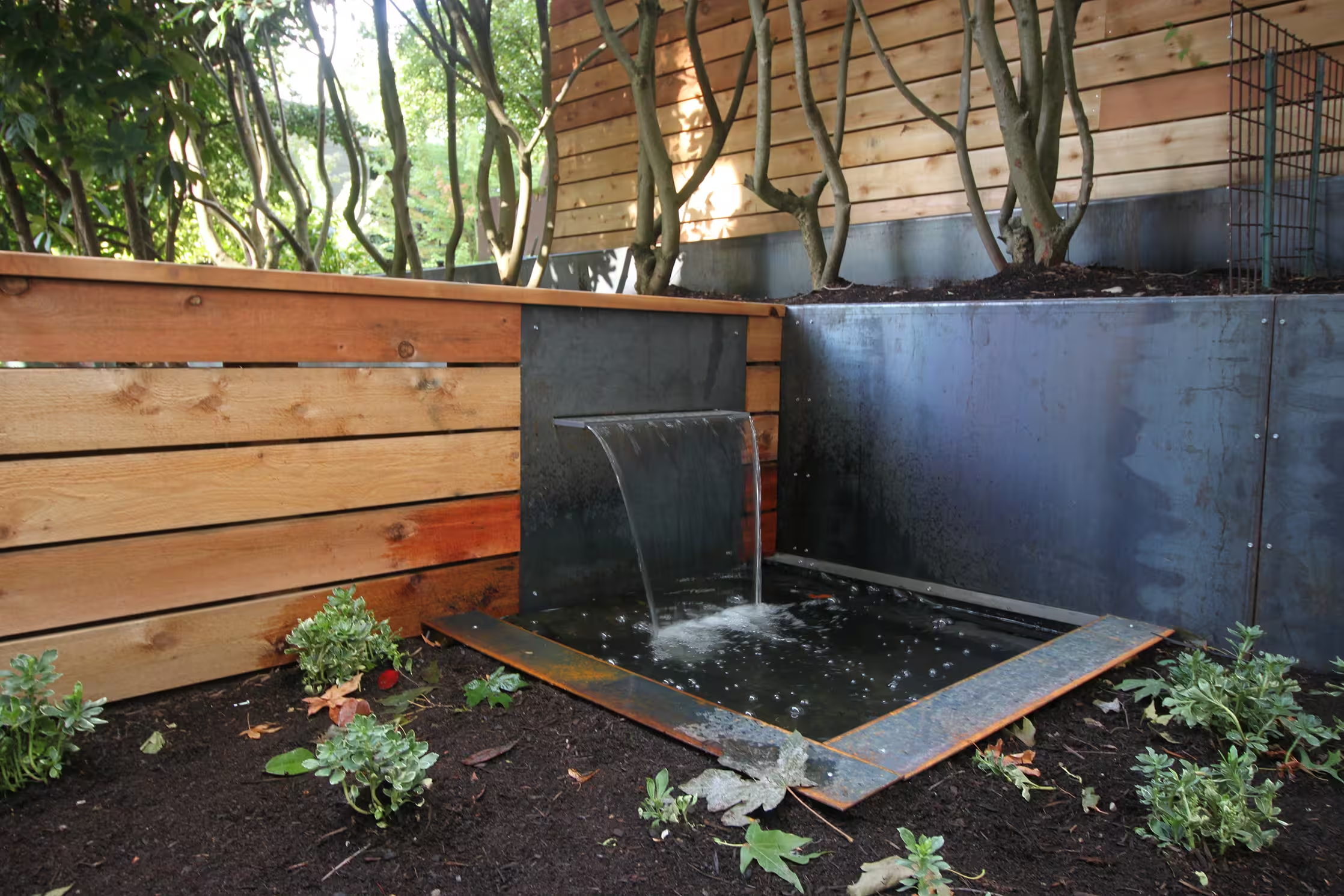
A magical element nothing else can replace.
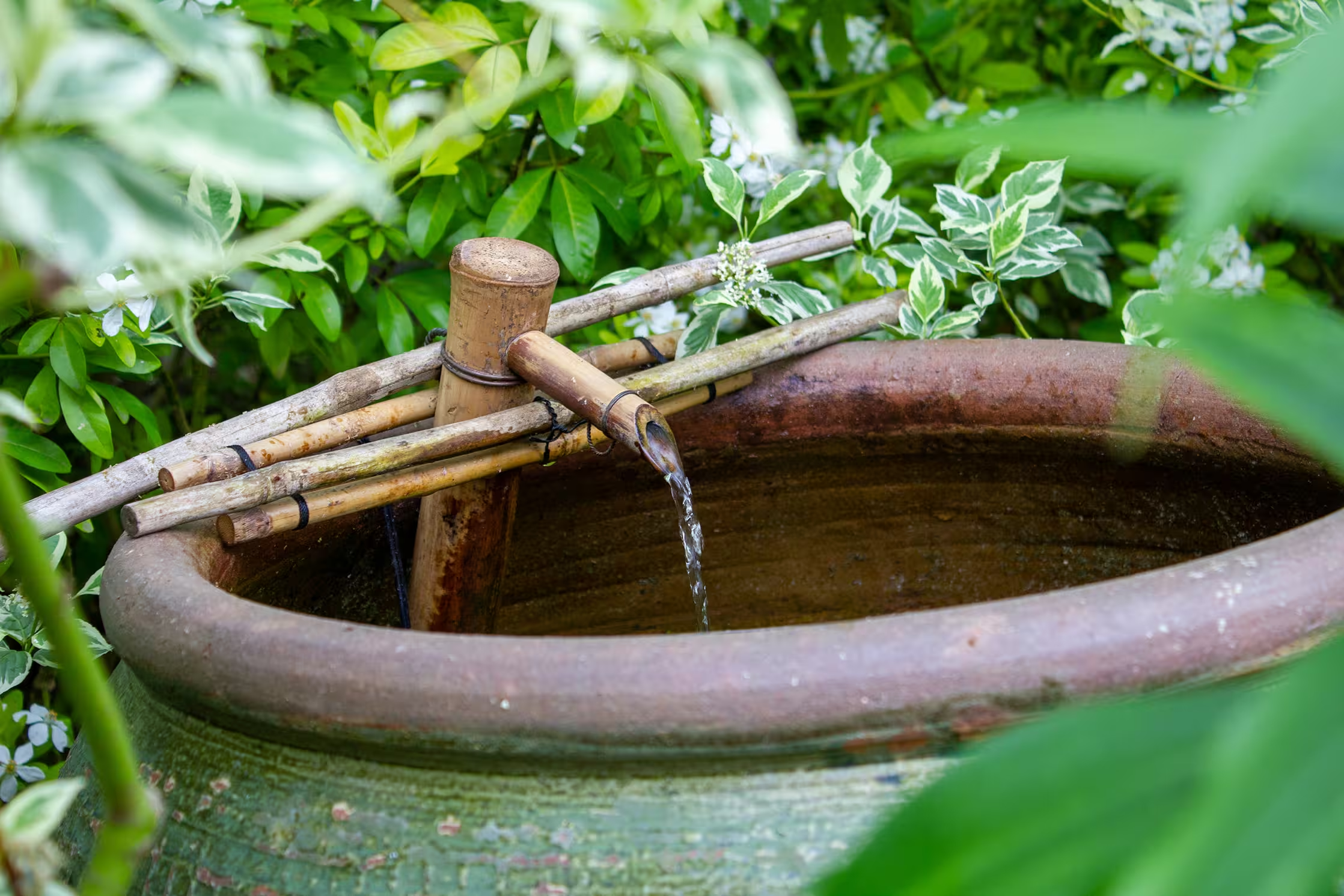
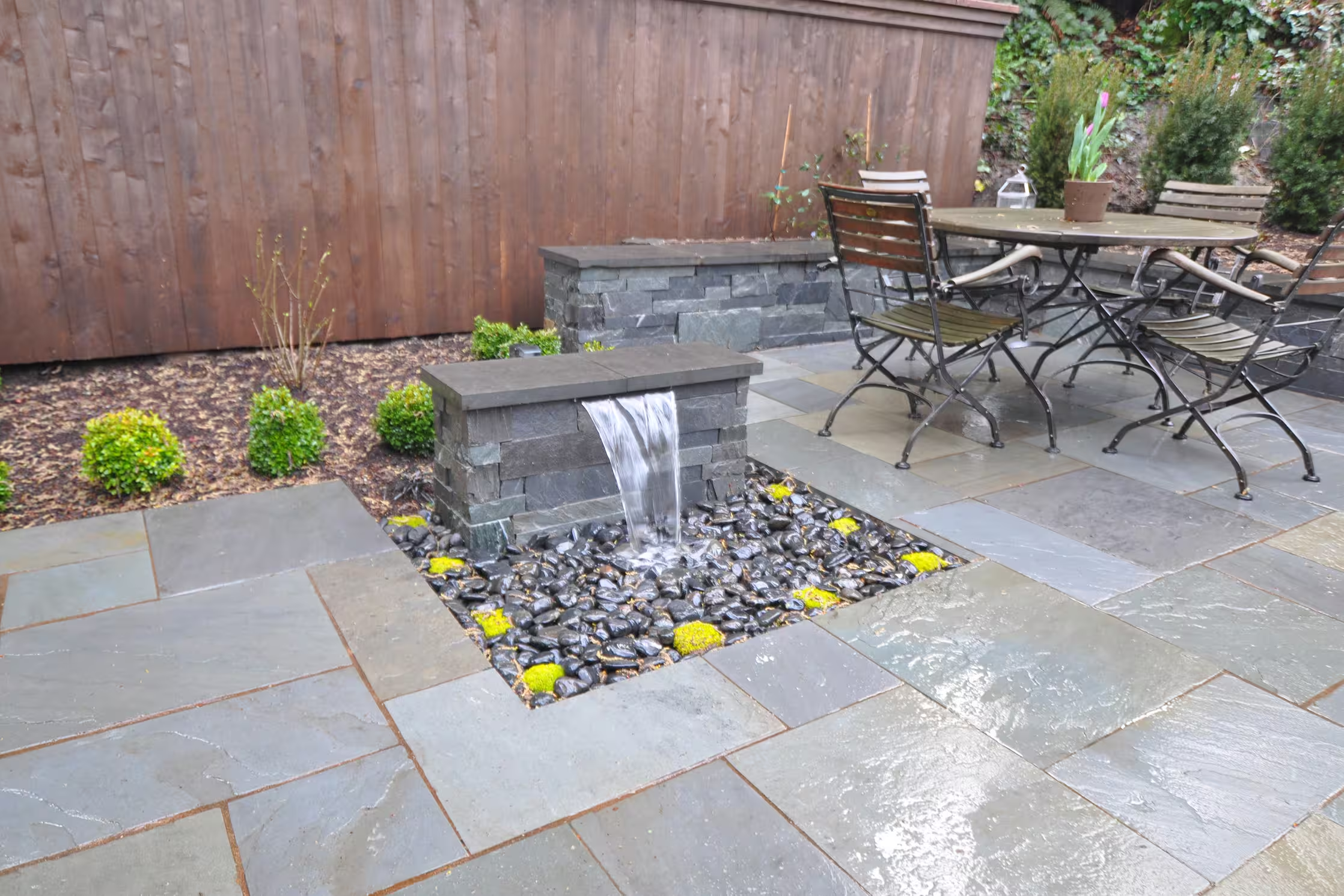
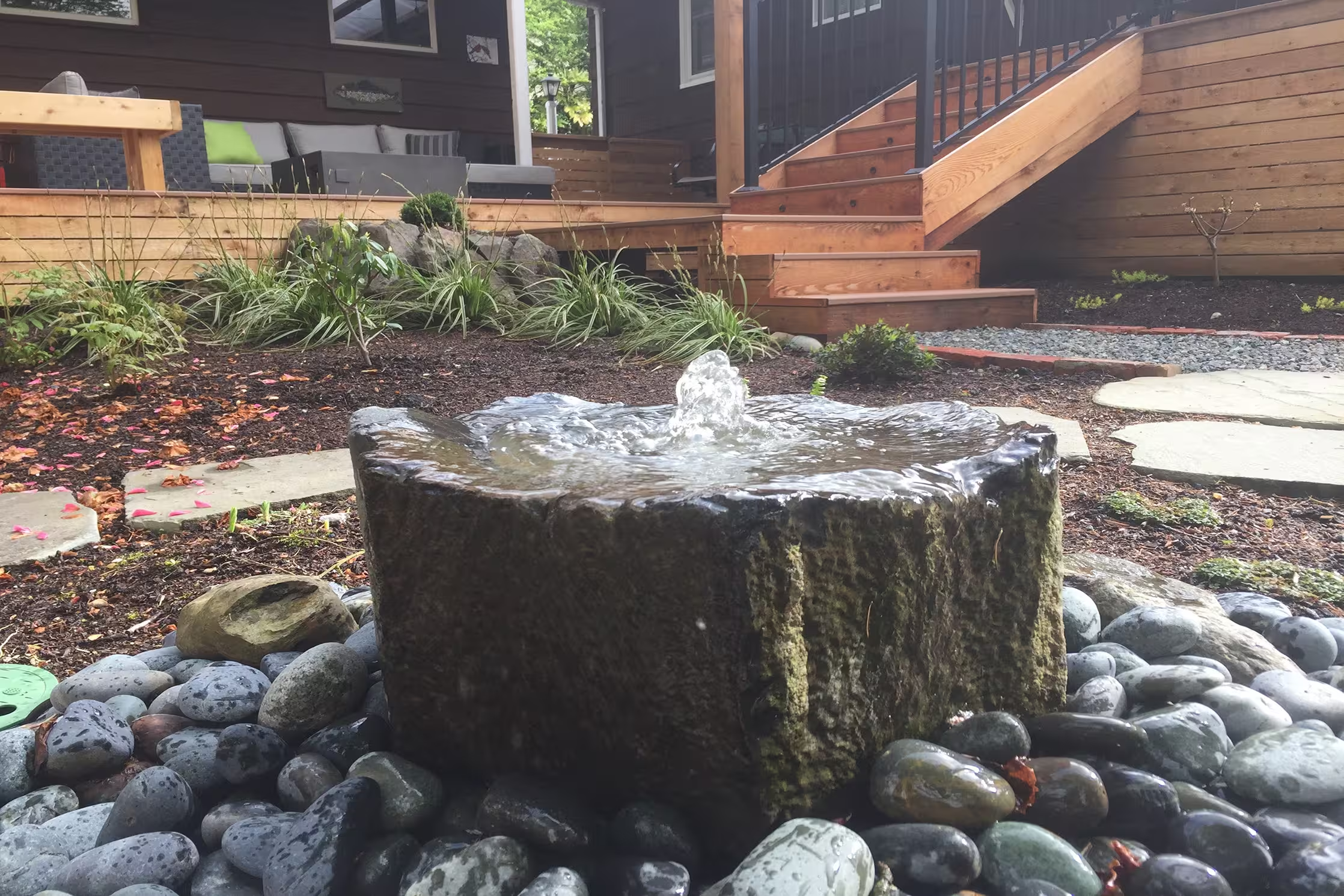
Water features in our world range from a bird bath all the way up to a long lap pool — and across that whole range, they do something to a space that nothing else can. Like a fire pit, a water feature can complete a landscape.
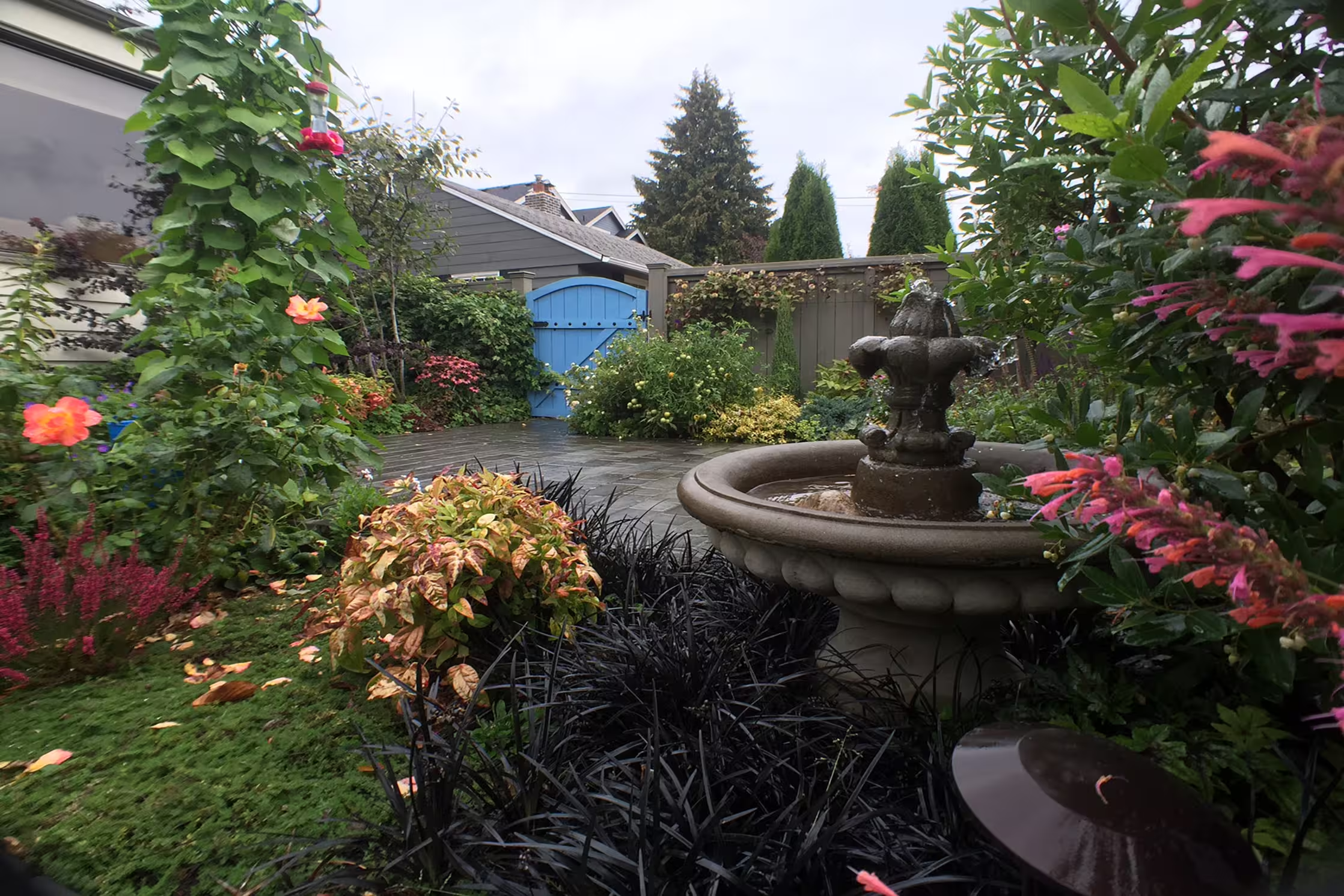
Watching birds discover your yard is a wonderful experience. A water feature brings a lot of life to a space.
The thing to know going in is that water features can be high maintenance. Know what you’re getting into.
The standard setup uses a basin below with the pump inside it. Maintaining it is a labor of love — cleaning the filters, winterizing it every fall. And when it’s time to service the standard setup, you pull away the rocks, find the little access panel, and stick your hand into water that’s cold and sometimes slimy.
There’s a better option we’ve been specifying a lot more lately: a remote vault system. One well-designed tank lives near the house, away from the water feature itself, with a pre-filter you service from the top. You lift the lid, pull out the stainless mesh basket, shake it out, put it back, and you’re done for a month.
That costs more up front. The time spent on maintenance drops to roughly a quarter of what it was. These systems also include auto shut-off and auto-fill valves, which matter more than people expect: if a water feature runs out of water, the pump burns out. In summer, or with a feature that splashes a lot, you can lose a surprising amount of water without noticing.
We generally recommend shutting a water feature down for the winter, mainly because running it is a waste of energy when nobody’s using it.
The exception is a feature in a front entry that you walk past every day — those can run all winter without trouble, because running water doesn’t freeze over and destroy the plumbing. The problems come when a feature is turned off but not properly winterized, and then it freezes.
Water is heavy, and moving it takes energy. The ongoing electrical cost of a typical pumped feature is roughly in the zone of leaving your entire kitchen lights on all the time — not enormous, but continuous.
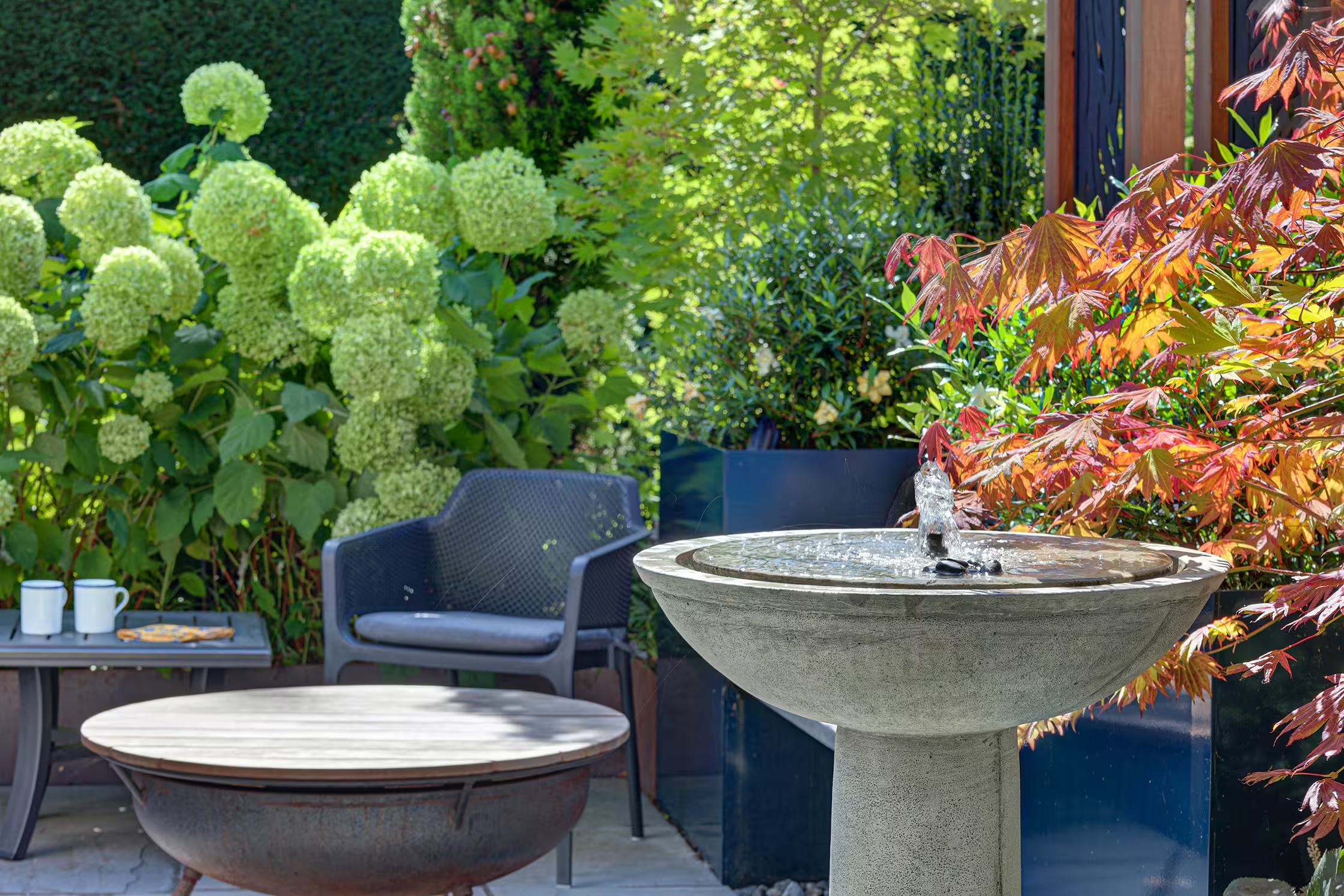
So for a truly environmentally forward-thinking person, we recommend a bird bath. You get honestly a lot of the same benefit without all the input: the wildlife, the reflection, the life in the garden, with no pump and no power. We push for at least a bird bath in every garden we build.
One we’re fond of is built around a salvaged piece of industrial steel — an old gravel-crushing component weighing roughly 700 pounds. Getting it up there was its own adventure. Water sheets down the face of it into a hidden basin below, and the result is a sculptural centerpiece with a history that predates the garden by decades.
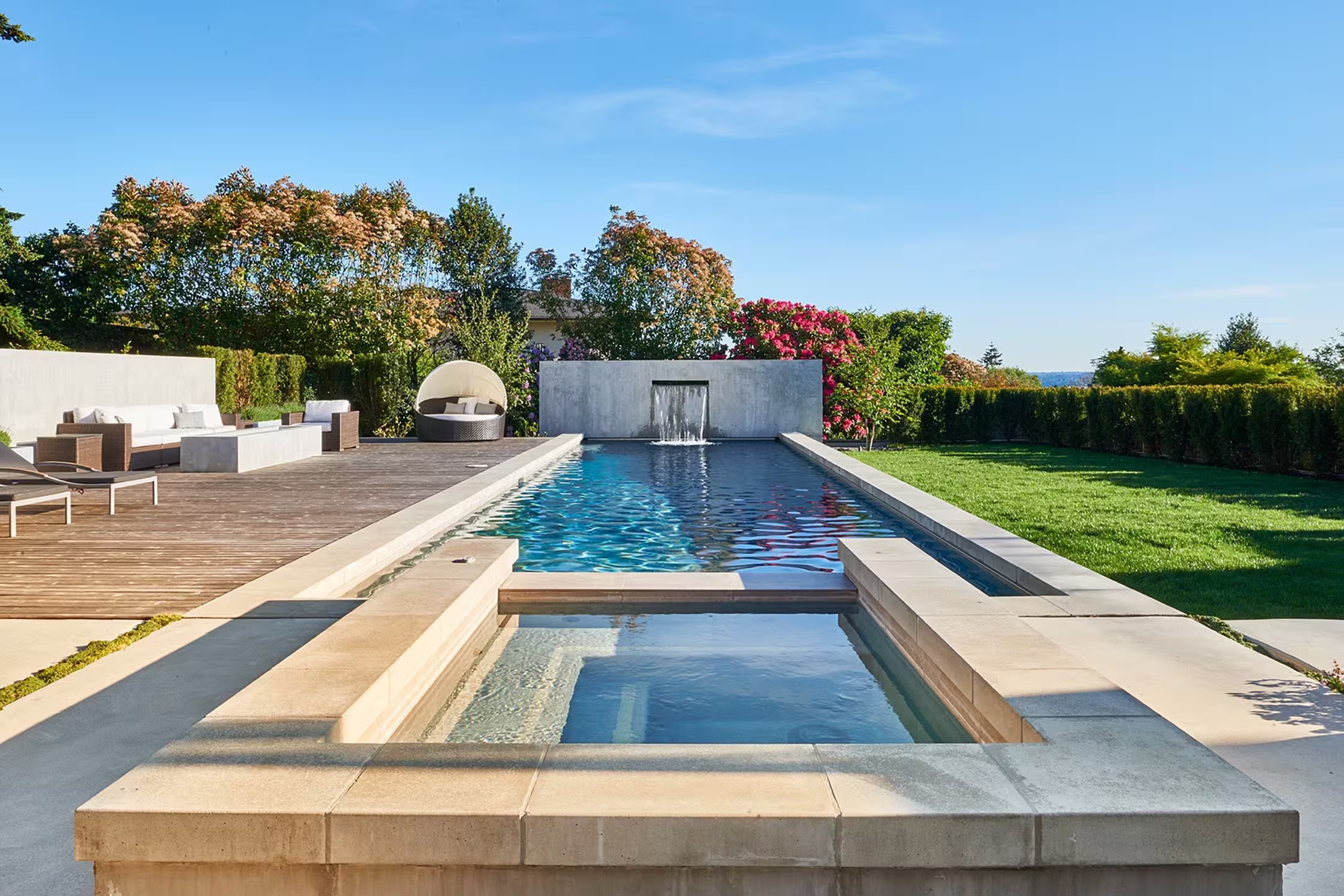
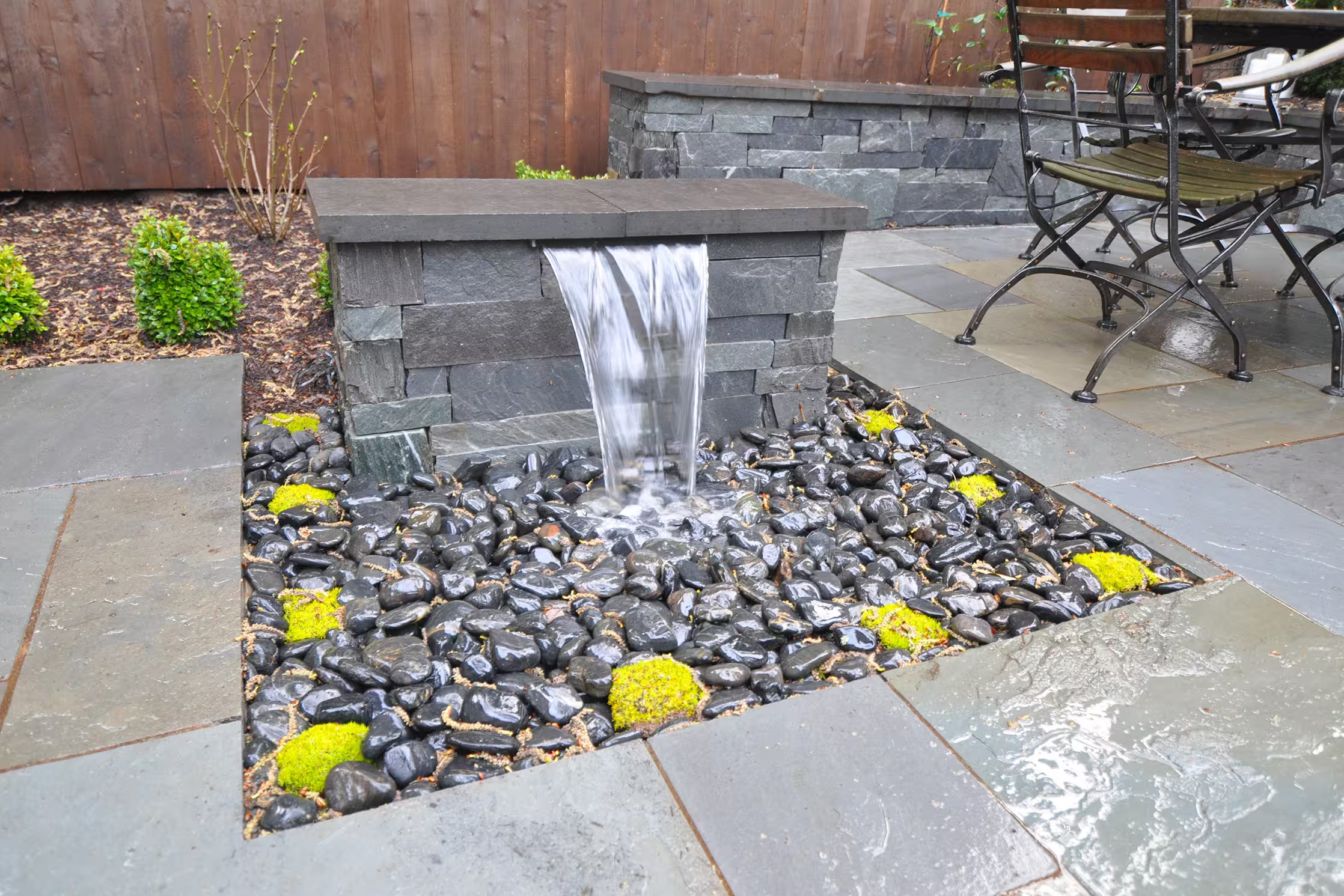
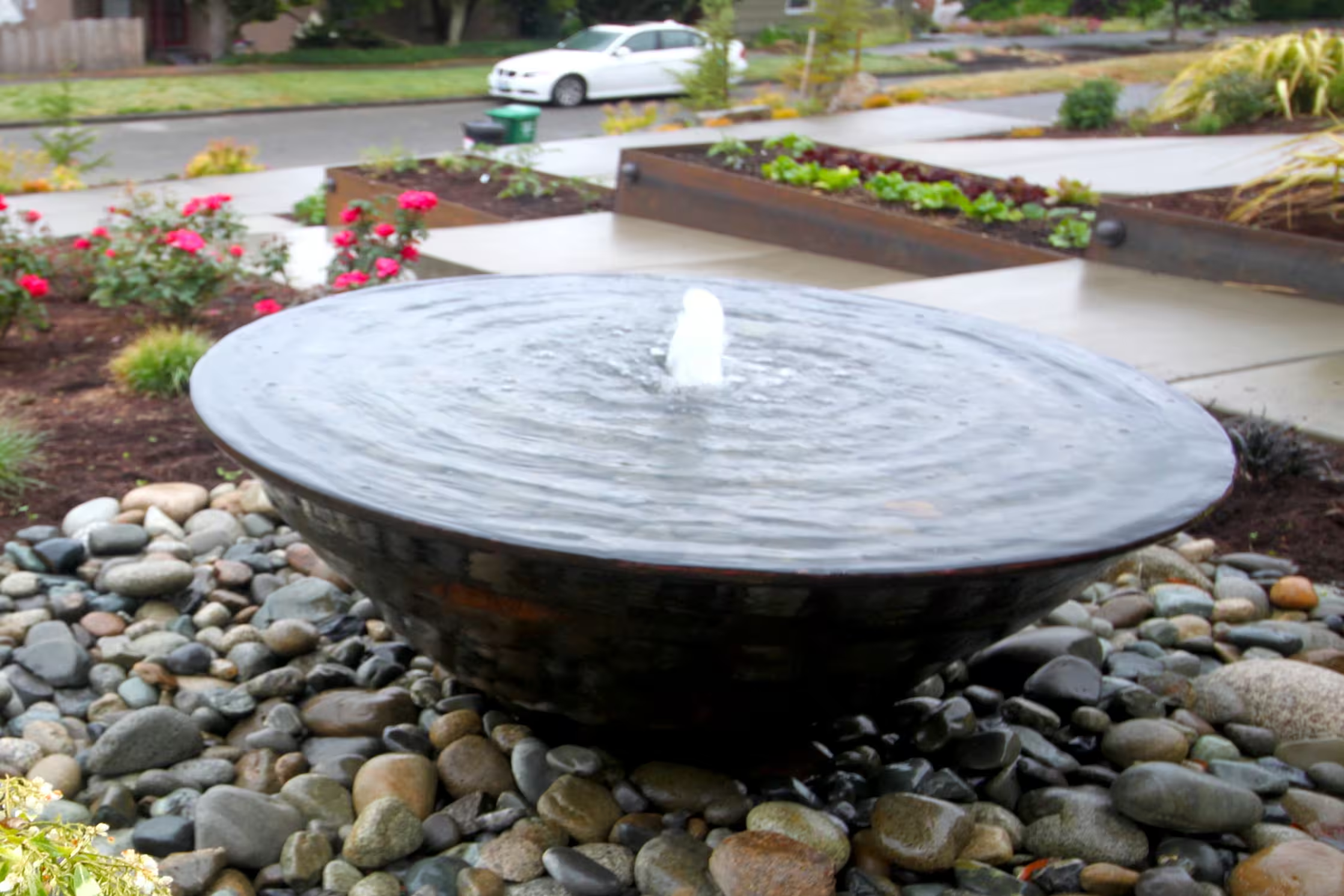
We’ve also built long, narrow lap pools that read as architecture as much as water, and simple basin-and-spill features scaled for small city yards. The common thread is that the sound reaches wherever people sit.
Are water features high maintenance?
A standard basin-and-pump setup requires regular filter cleaning and annual winterizing — it’s a labor of love. A remote vault system cuts the time to roughly a quarter of that and makes the work far less unpleasant, since you service it from a lid near the house rather than reaching into cold water under rocks.
Do water features really block noise?
They mask it rather than block it. Running water creates white noise that competes with traffic and neighbor sound, which is often more effective than trying to build a barrier.
Should I shut my water feature off in winter?
Usually yes — mainly because running it when nobody’s outside wastes energy. A front entry feature you pass daily can run all winter, since moving water doesn’t freeze. The real danger is turning one off without properly winterizing it.
How much electricity does a water feature use?
Water is heavy, so pumping it is continuous work, but the cost isn’t dramatic — roughly comparable to leaving all your kitchen lights on. The bigger sustainability question is whether you need a pump at all.
What’s the most sustainable water feature?
A bird bath. You get much of the same benefit — wildlife, reflection, life in the garden — with no pump, no power, and no plumbing. We push for at least one in every garden.
Will a water feature attract wildlife?
Yes, and quickly. Birds, honeybees, and hummingbirds all find them. For a lot of our clients it ends up being the favorite part.