
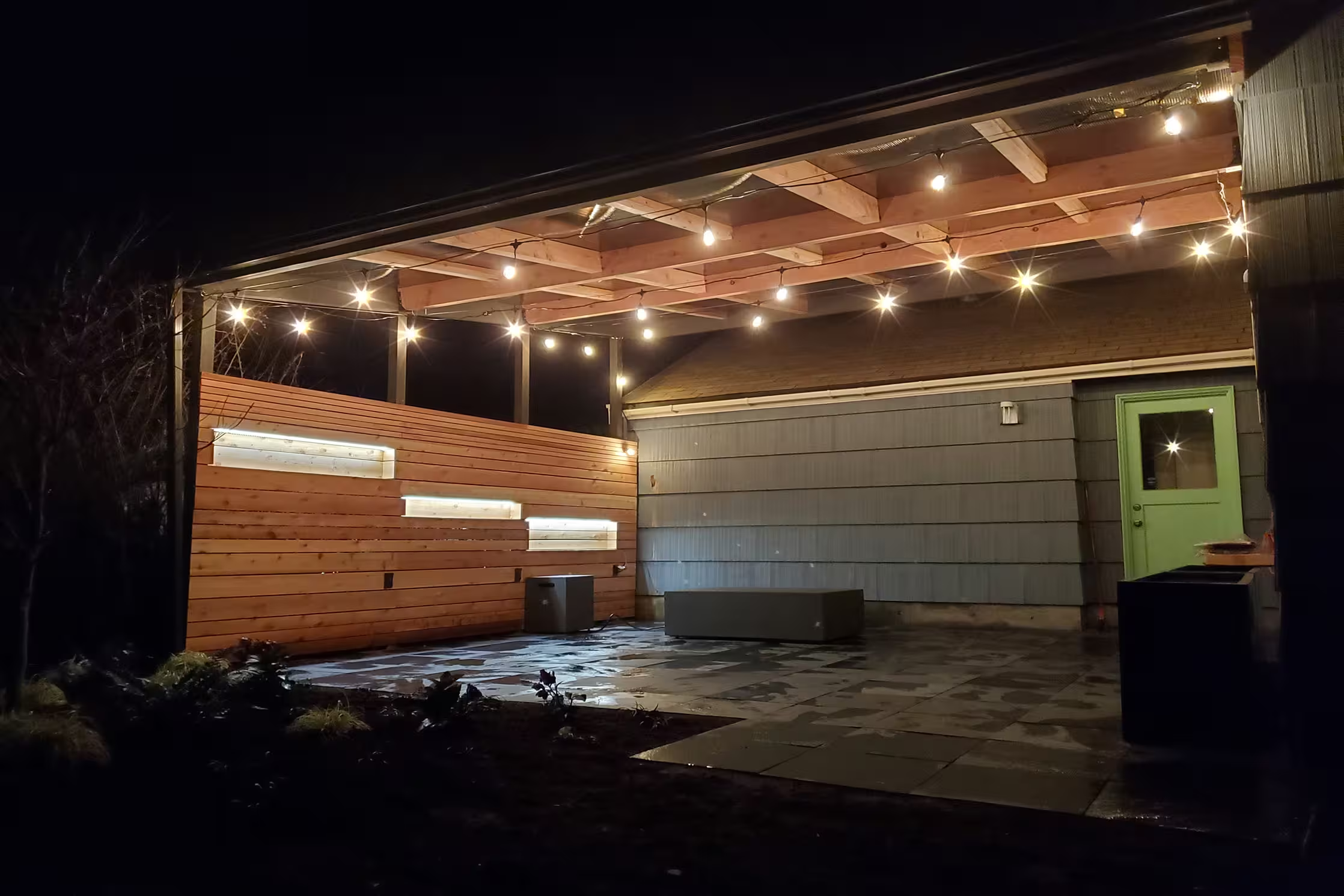
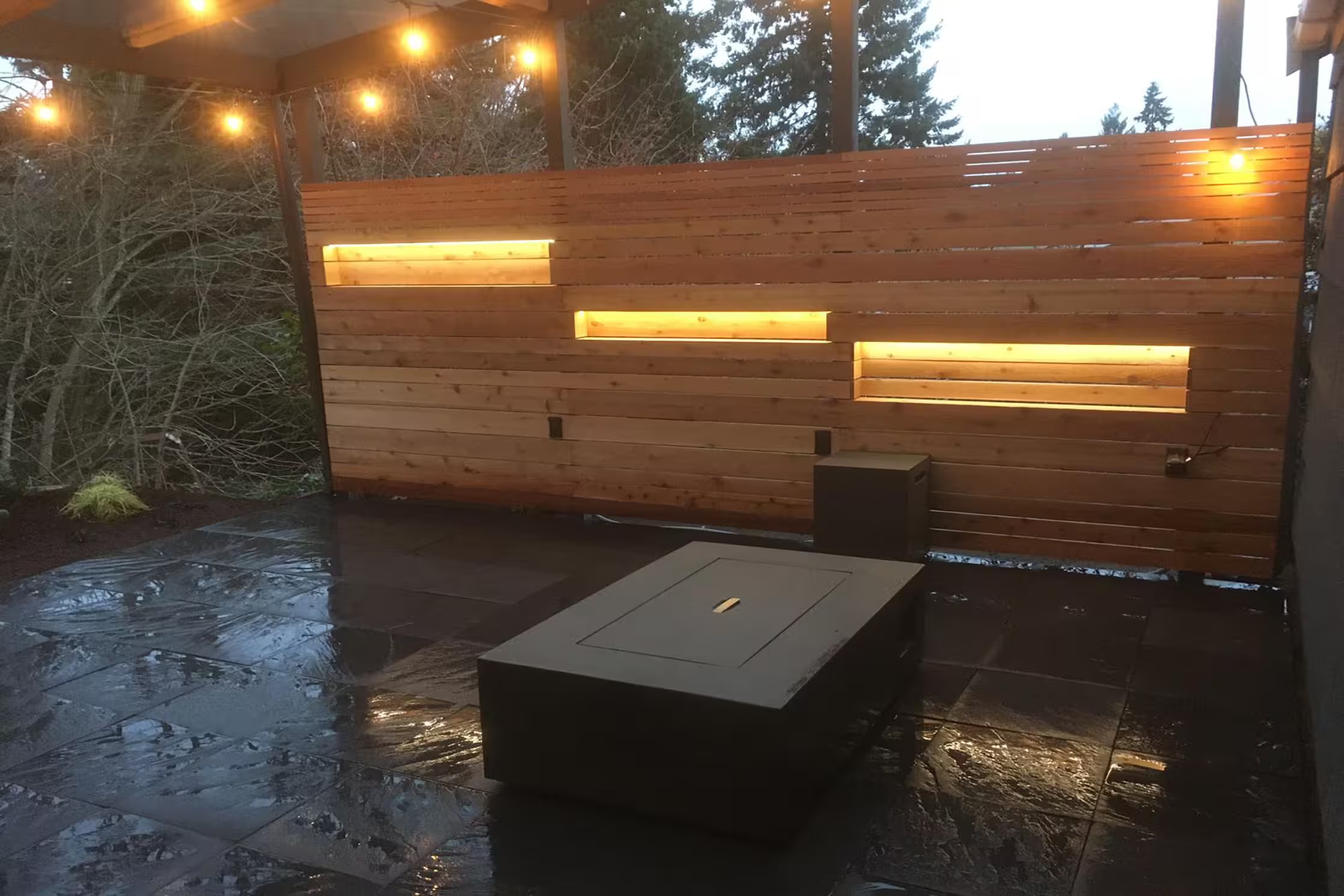
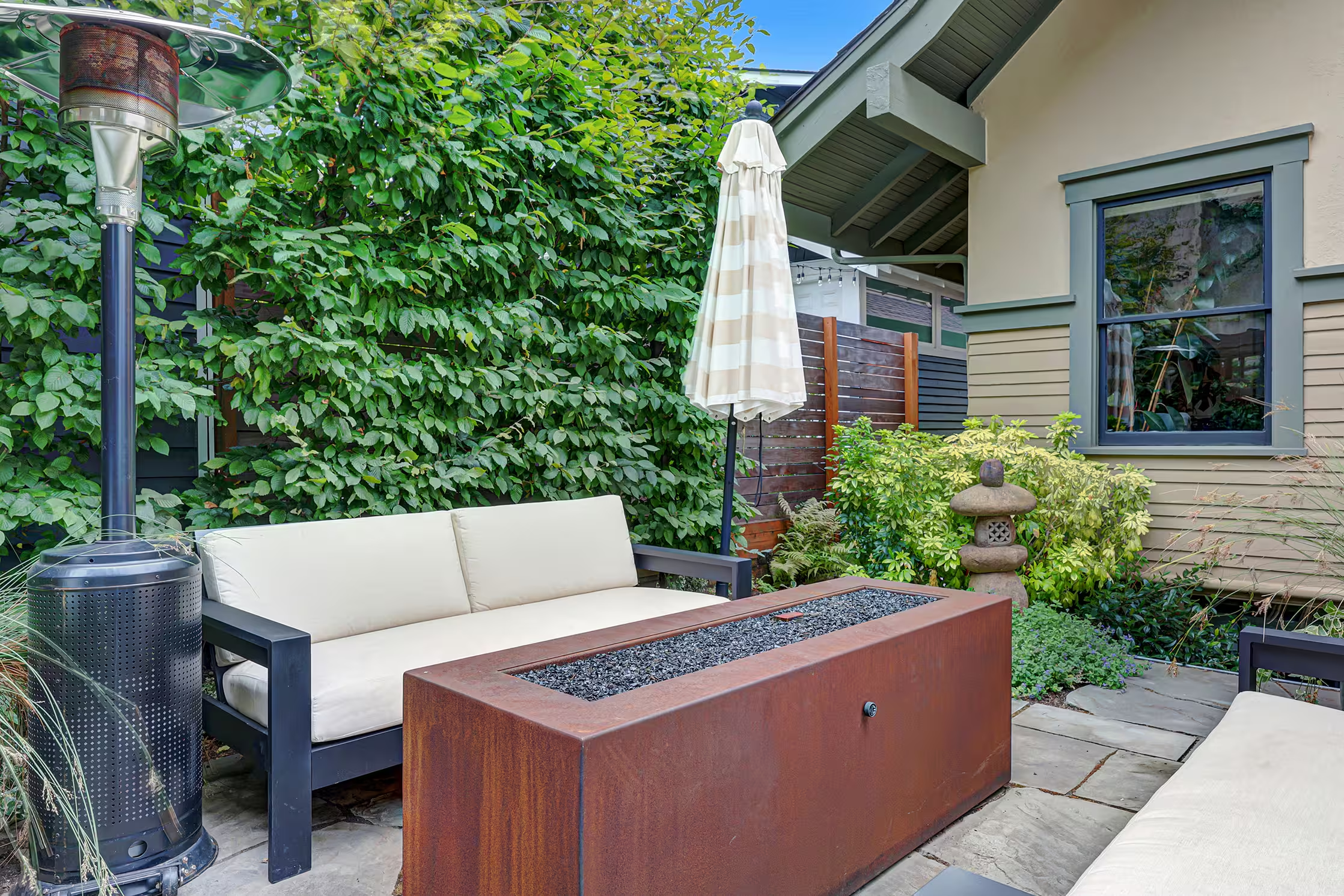
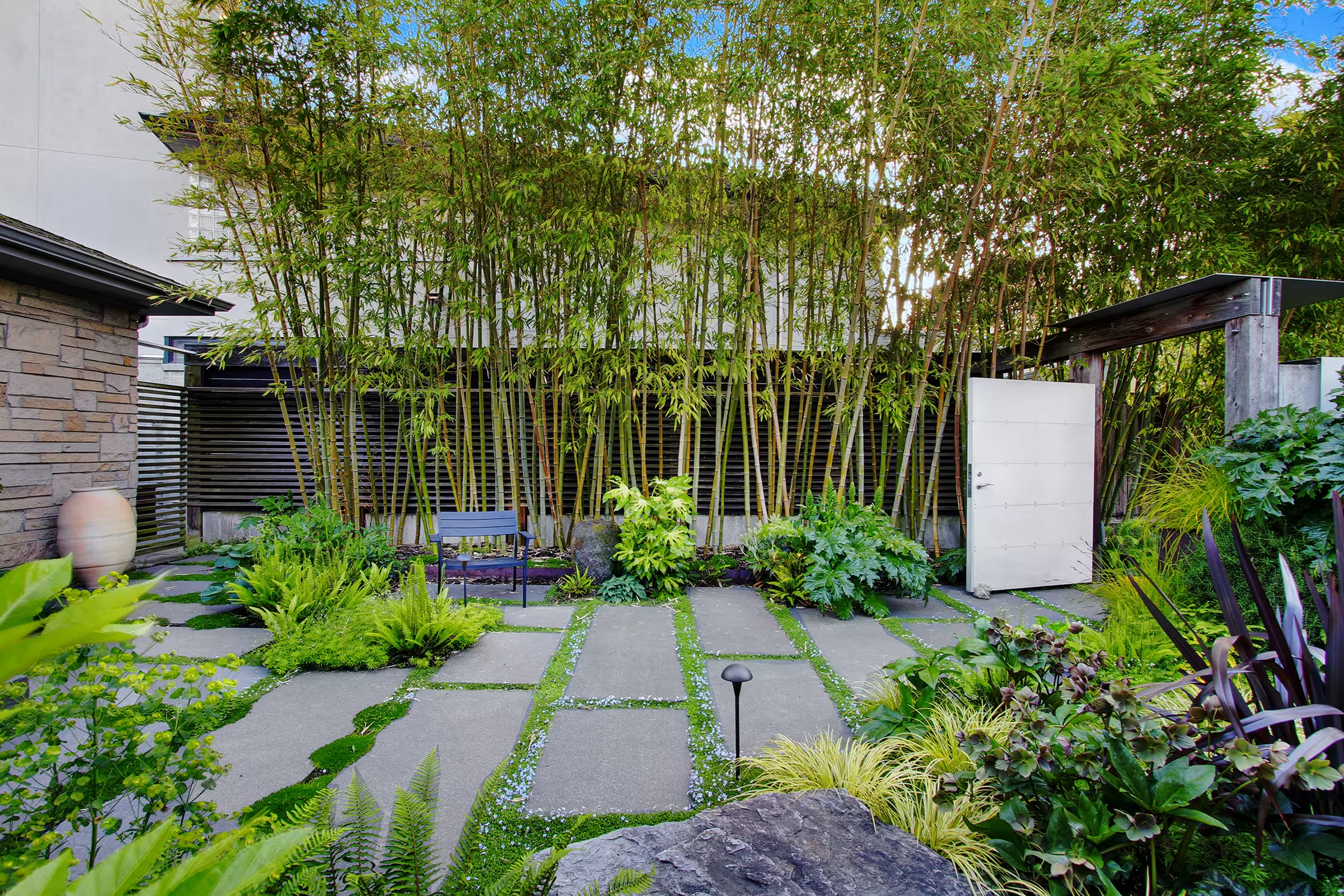
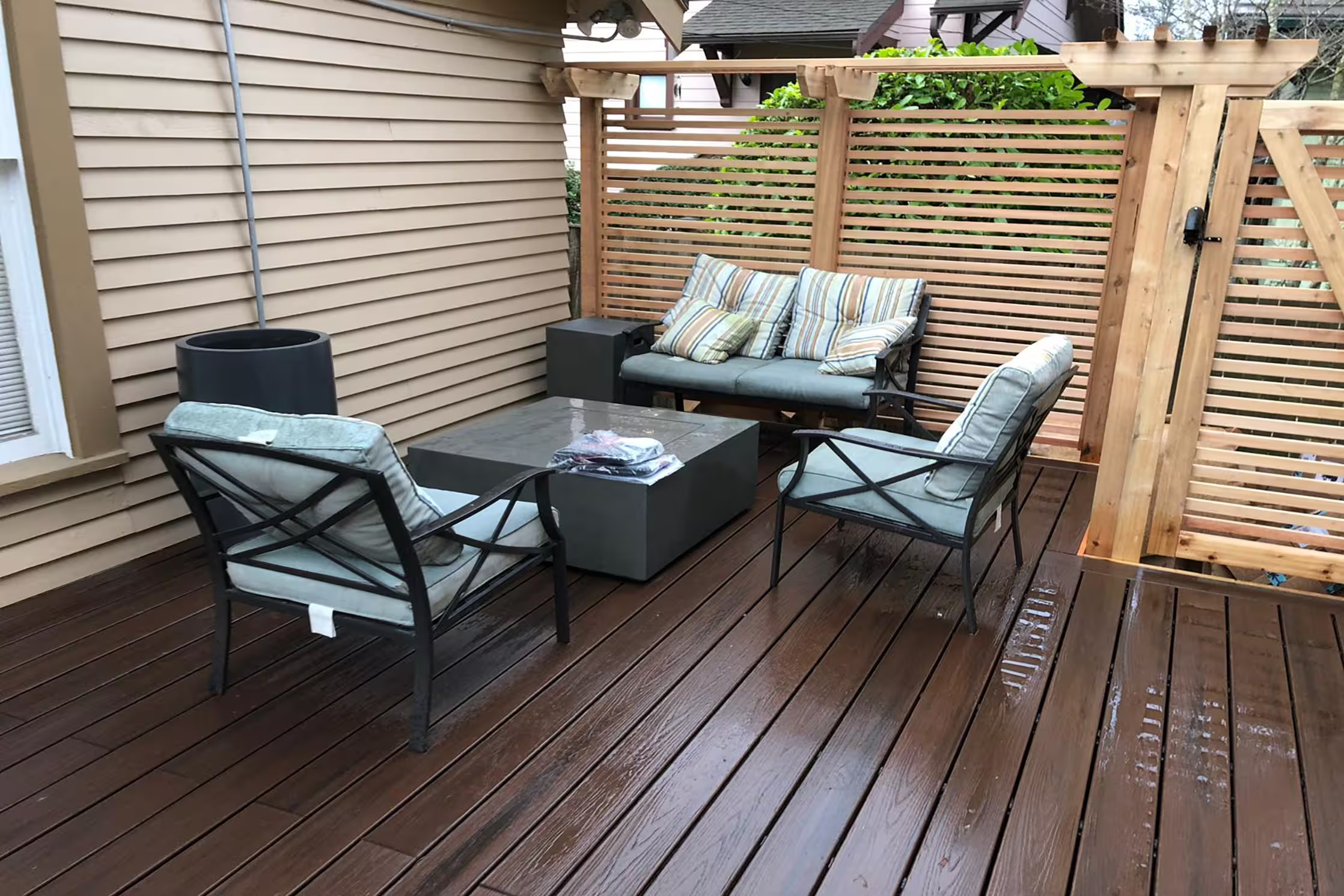
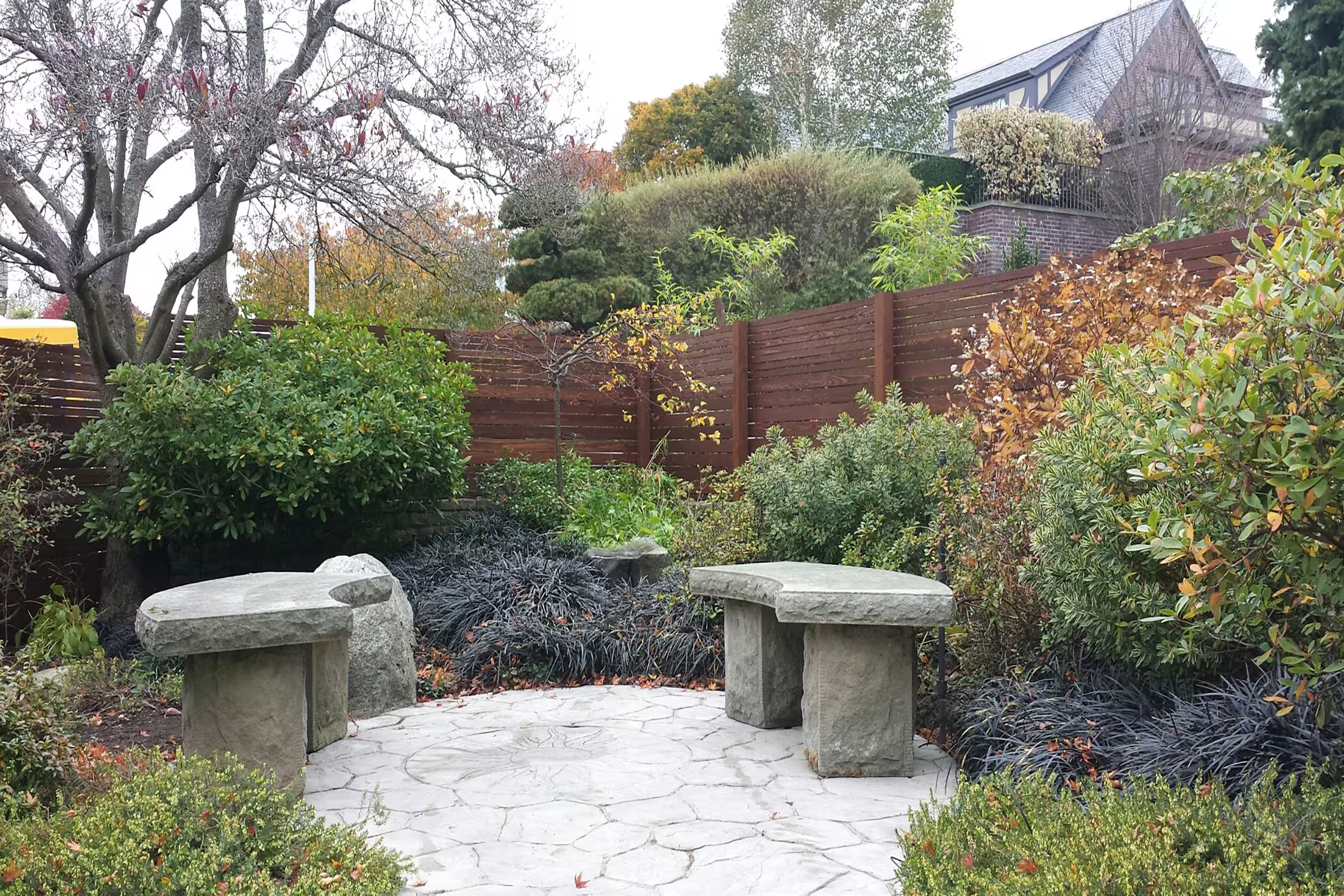
Creating an urban oasis that feels secluded, even in the city.
Privacy is what makes a backyard feel like it’s yours. It’s the biggest shame when people have a beautiful backyard and don’t want to use it because they feel like they’re hanging out with their neighbors.
In Seattle right now, privacy is a commodity. The zoning has changed, and we see more and more houses get torn down and replaced with three buildings, each one looming over the entire yard. These massive structures kind of just take over a neighborhood. If that’s happened next door to you, you already know the feeling we’re describing.
Most people’s first inclination is to build the tallest fence possible. But in addition to aesthetics, there are code limitations on how high a structure can go. A fence can only do so much.
What actually works best is a layered strategy to privacy:
We’ll design entire spaces around the problem. If a neighbor is outside barbecuing all the time, we’re going to put your outdoor hangout spot on the opposite side of the yard. There’s a lot of strategy that goes into this.
The thing to protect while you’re solving for privacy is daylight. Light is a premium in Seattle, and if you trade away your light and your air for privacy, the space just feels suffocating and dark.
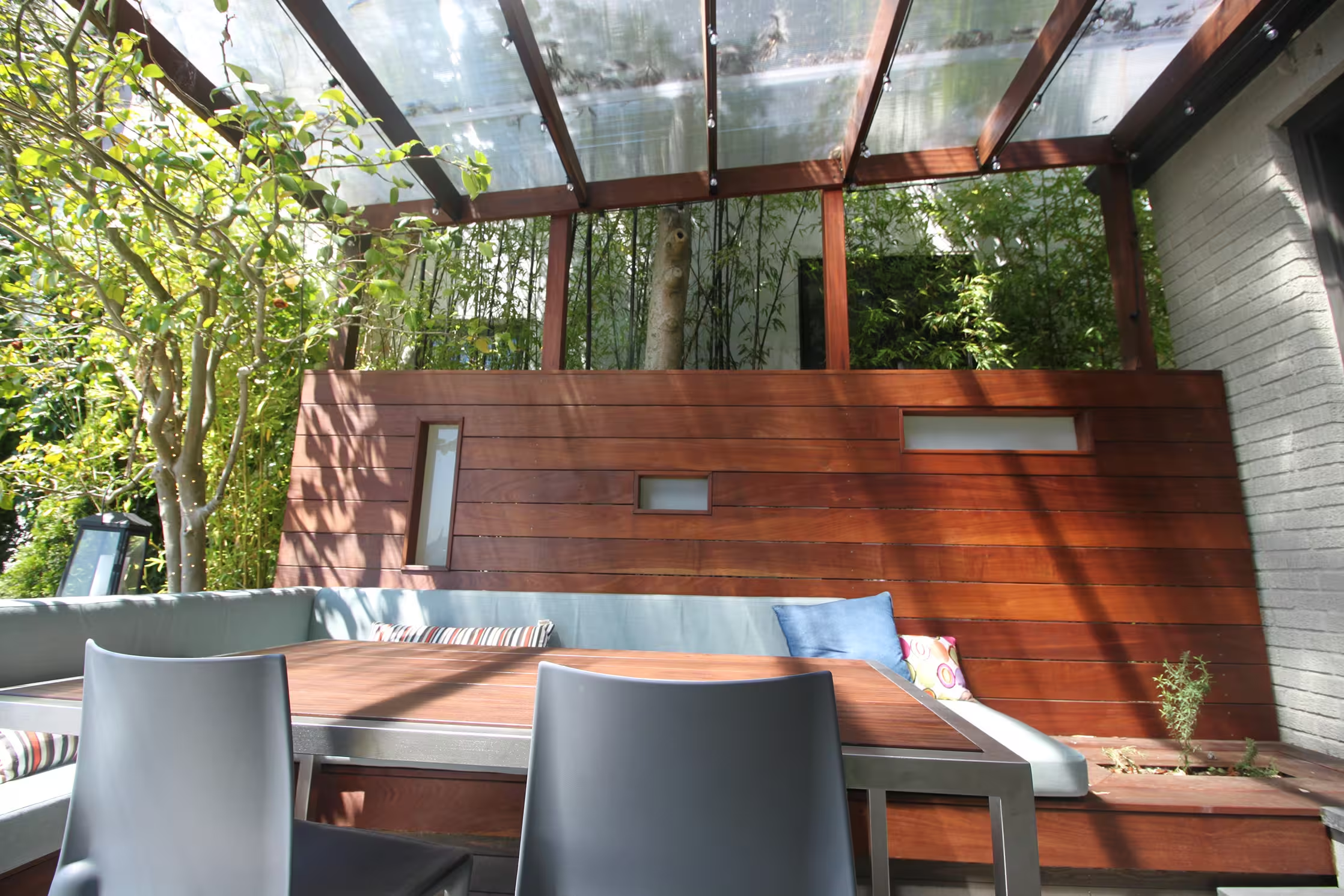
One shelter we built uses a solid wall with frosted glass panels set into it. When you’re sitting at the table, you’re completely private — but the wall still lets a lot of light through. There are plenty of materials that will block a sightline without blocking the sun.
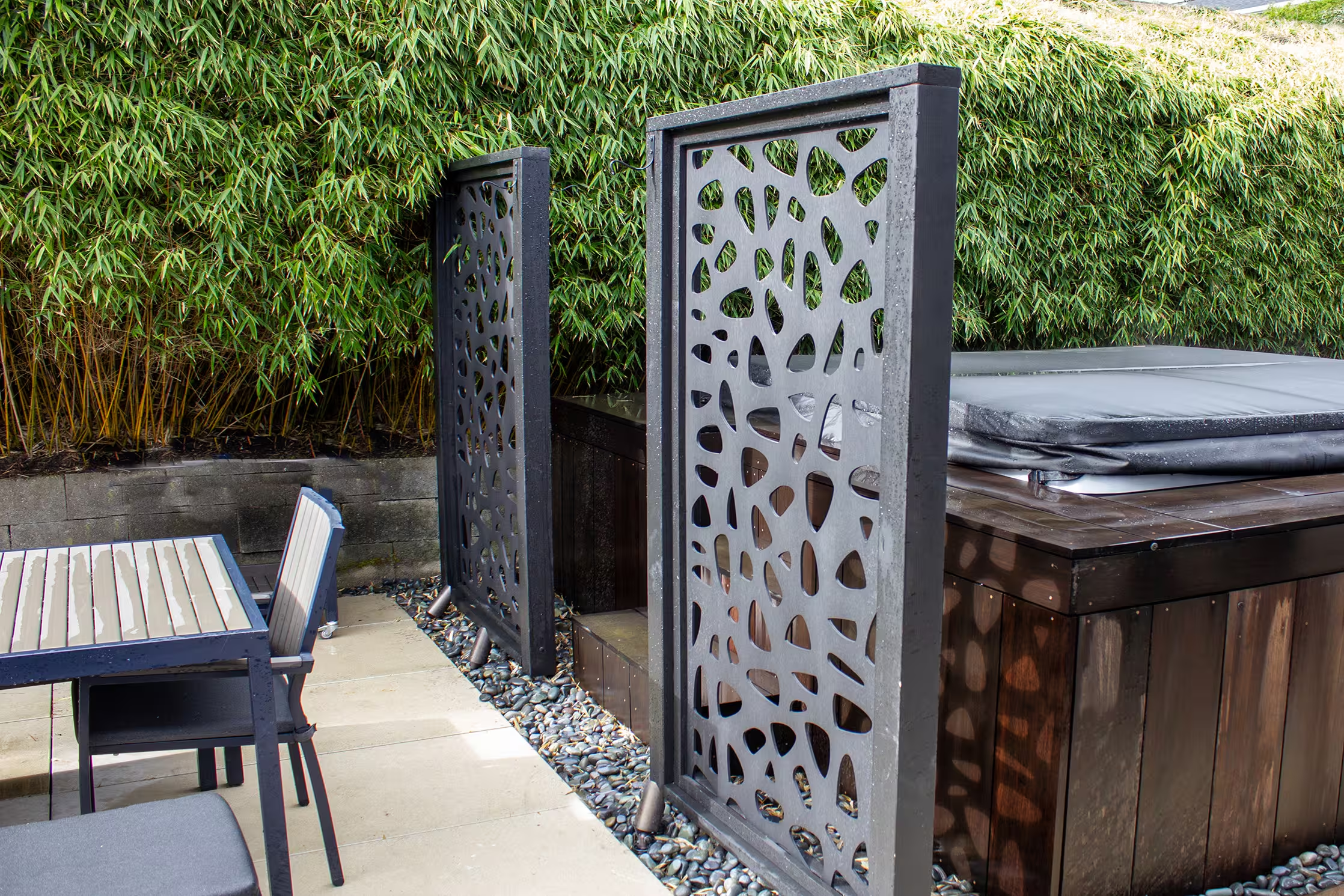
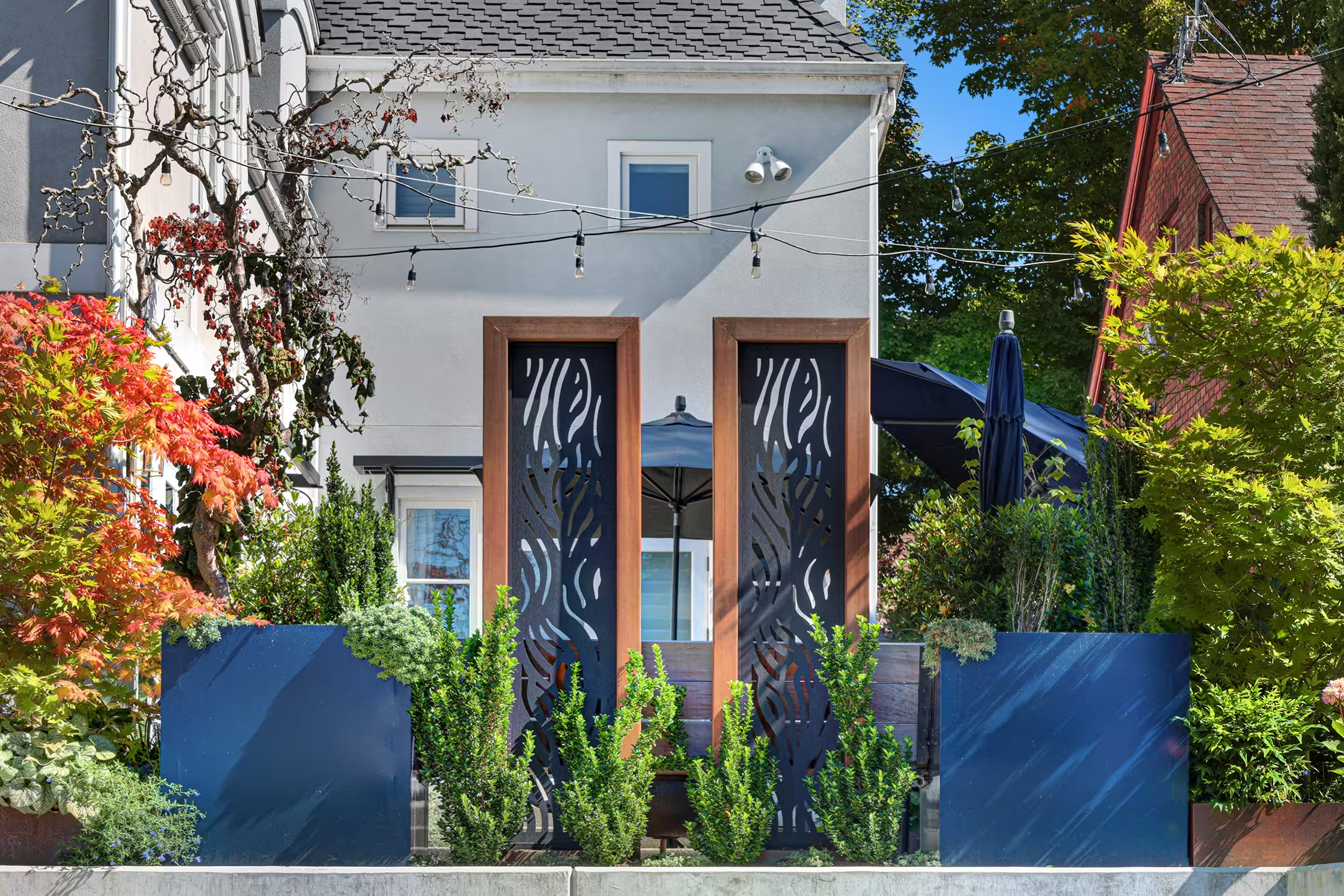
We have access to laser cutters, which means we can custom-make just about anything. On one project, the client picked the pattern, we built the frame, and we had the panels cut to match.
That particular installation screens a hot tub. There’s a green hedge behind the tub — which is just kind of a magical feeling when you’re in the water — and the laser-cut steel panels sit close in on the exposed side, blocking the neighbors’ windows. It’s a good example of a small privacy structure placed close to where it’s needed, rather than a tall barrier around the whole property.
For instant privacy, there are fewer options — built structures, mature plantings, and screens that work on day one.
But for folks willing to plan ahead, it really opens up a lot of doors. Plants grow. A hedge or green screen gets taller, denser, and more beautiful every year, in a way that no fence ever will.
There aren’t any instant answers for barbecue smoke, road noise, or sound in general — it’s just very hard to actually block. The realistic approach is to overpower rather than eliminate:
Neighbors can do whatever they want on their property. The design work is in adjusting around it.
Assuming you need evergreen hedges. This is the big one. People default to evergreens for year-round screening, but there are roughly four months a year when that’s the only thing they’re doing for you — and most people aren’t outside during those hours anyway. Being open to deciduous privacy screening plants opens up a lot of beautiful options.
Going taller instead of smarter. Height is capped by code. Placement isn’t.
Sacrificing light for enclosure. A dark, closed-in yard is a yard you won’t use, which defeats the entire point.
How can I get privacy from a tall townhouse next door?
A fence won’t reach, so the answer is usually layered: strategically placed trees and taller shrubs to block specific upper-floor sightlines, hedges or green screens that can grow well above fence height, and small built structures or panels positioned close to where you actually sit.
What’s the fastest way to add privacy to a backyard?
Built structures and screens work immediately — walls, shelters, and custom panels. Plantings take time, but they’re the only approach that gets better every year, so most good solutions use both.
Do I need an evergreen hedge for privacy?
Not necessarily, and assuming you do is the most common mistake we see. Evergreens only earn their keep for about four months a year — hours most people aren’t outside anyway. Deciduous screening plants open up far more beautiful options.
Can you build a privacy screen without blocking my light?
Yes, and it’s the balance we’re always working. Frosted glass panels, laser-cut steel screens, and slatted or patterned walls all block sightlines while letting daylight through. Light is a premium in Seattle and it’s not worth trading away.
Can landscaping block road noise or neighbor smells?
Not entirely — those are genuinely hard to block. The practical approach is to overpower them: a water feature provides white noise that masks traffic, and fragrant plantings can compete with a neighbor’s barbecue smoke.
Can you make custom privacy panels?
We can. We have access to laser cutters, so clients can choose a pattern and we’ll fabricate the frame and have the panels cut to match.