

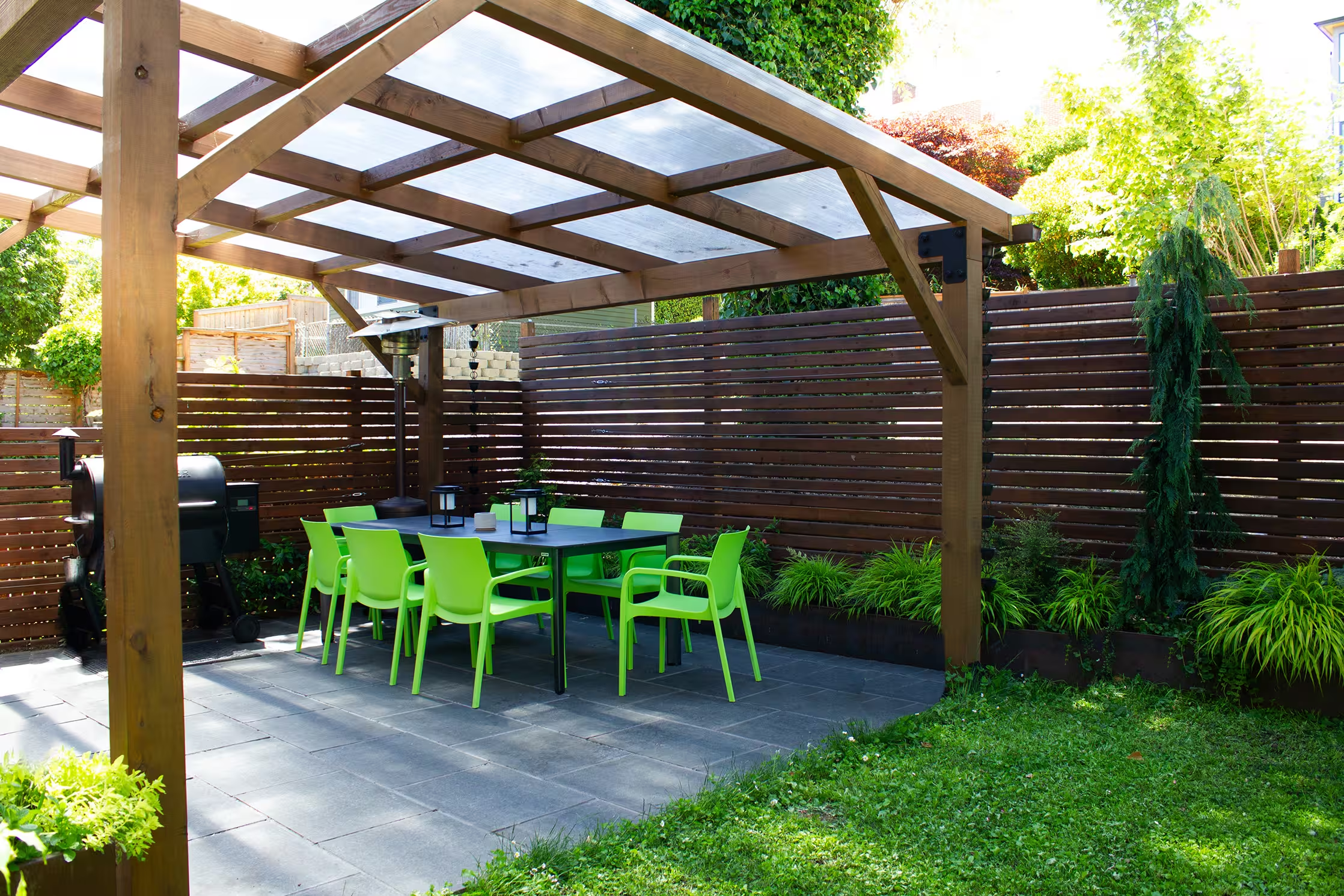
The heart of the landscape.
Outdoor dining spaces are a lot of fun to design, and they can be the heart of any landscape. Of everything we build, the dining space is probably the most used.
It starts by thinking about people, not furniture. Who’s going to be eating there? Do you like cozy and intimate, or do you want some space? Should it feel shady and private, or immersed in nature? The answers determine almost everything that follows.
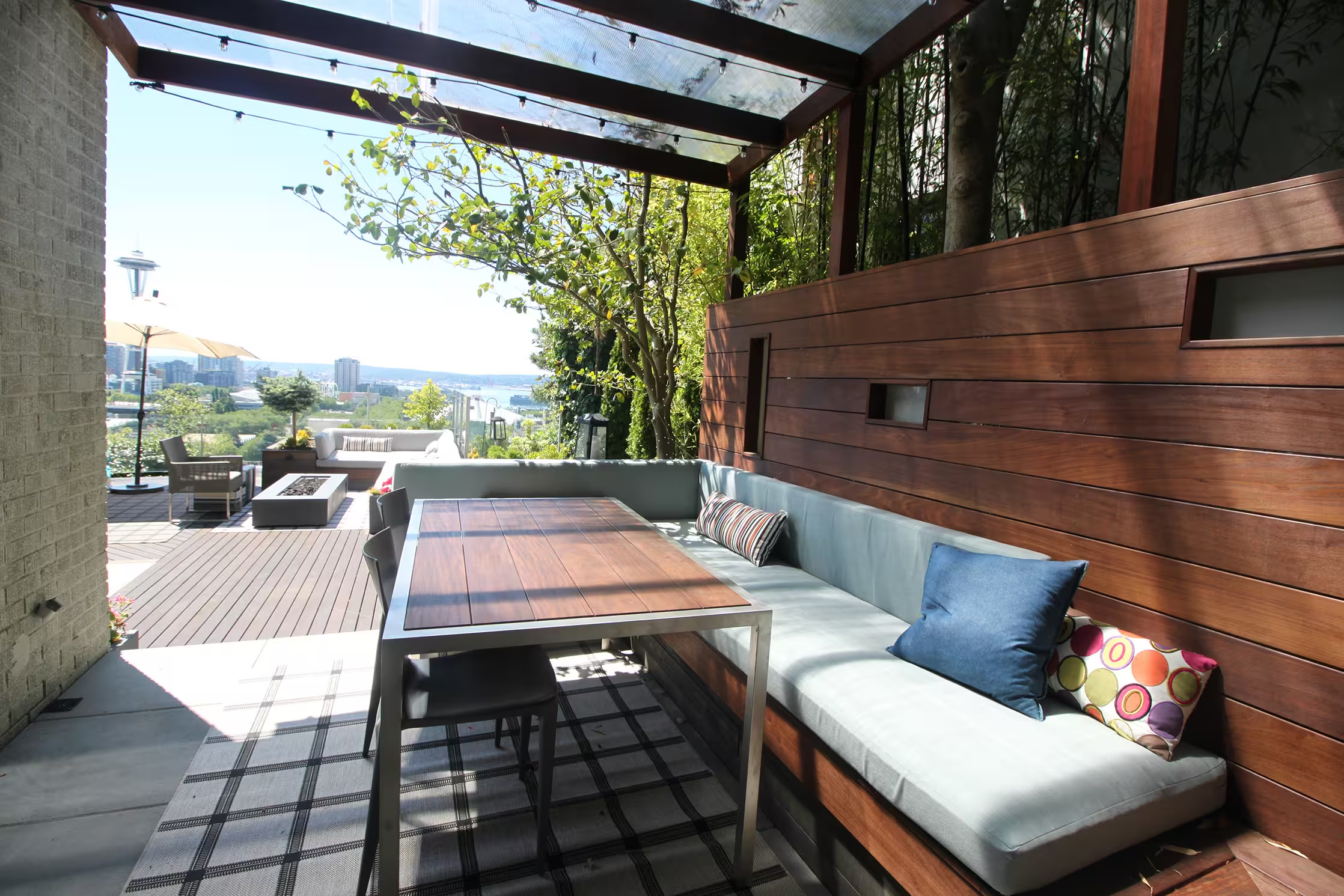
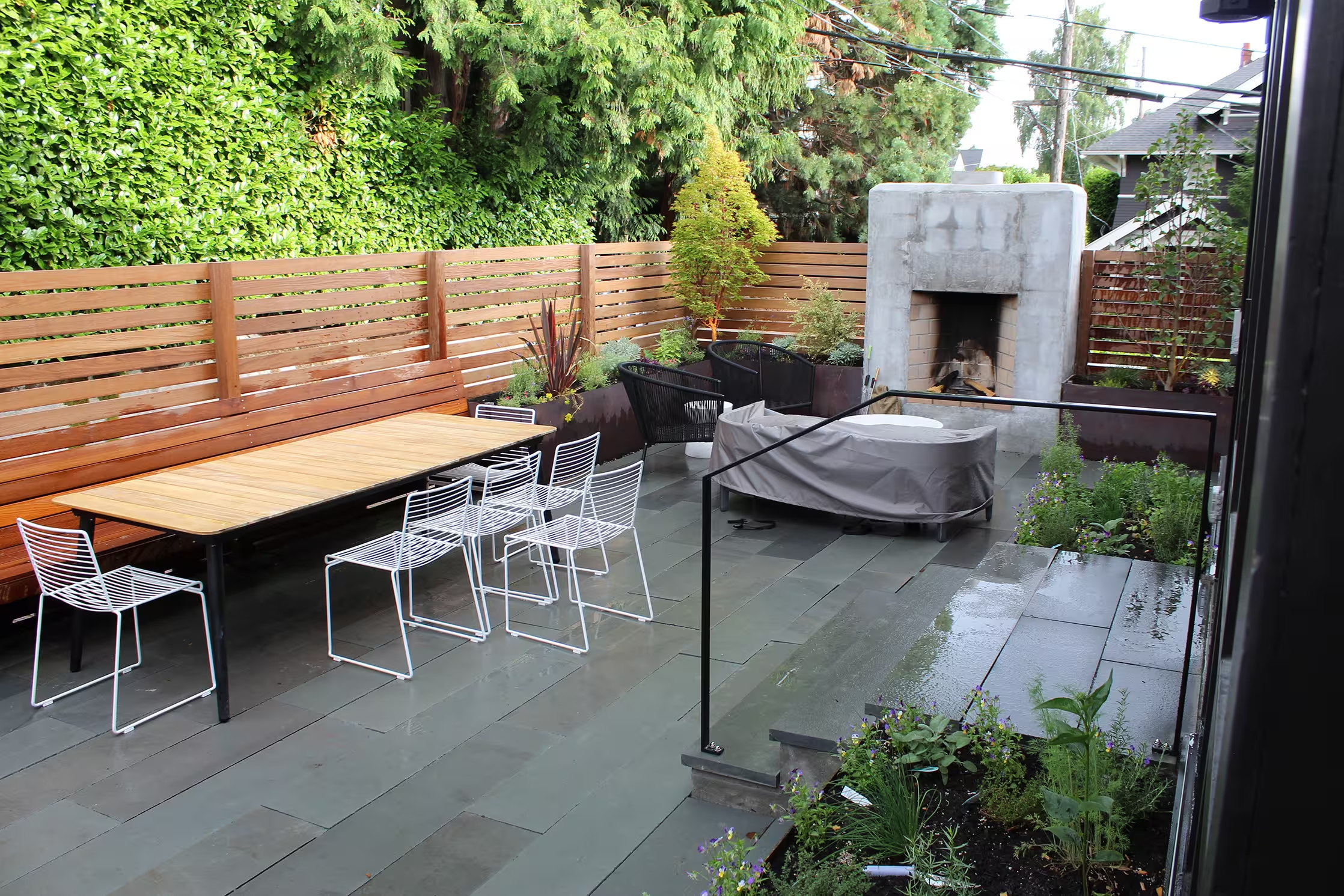
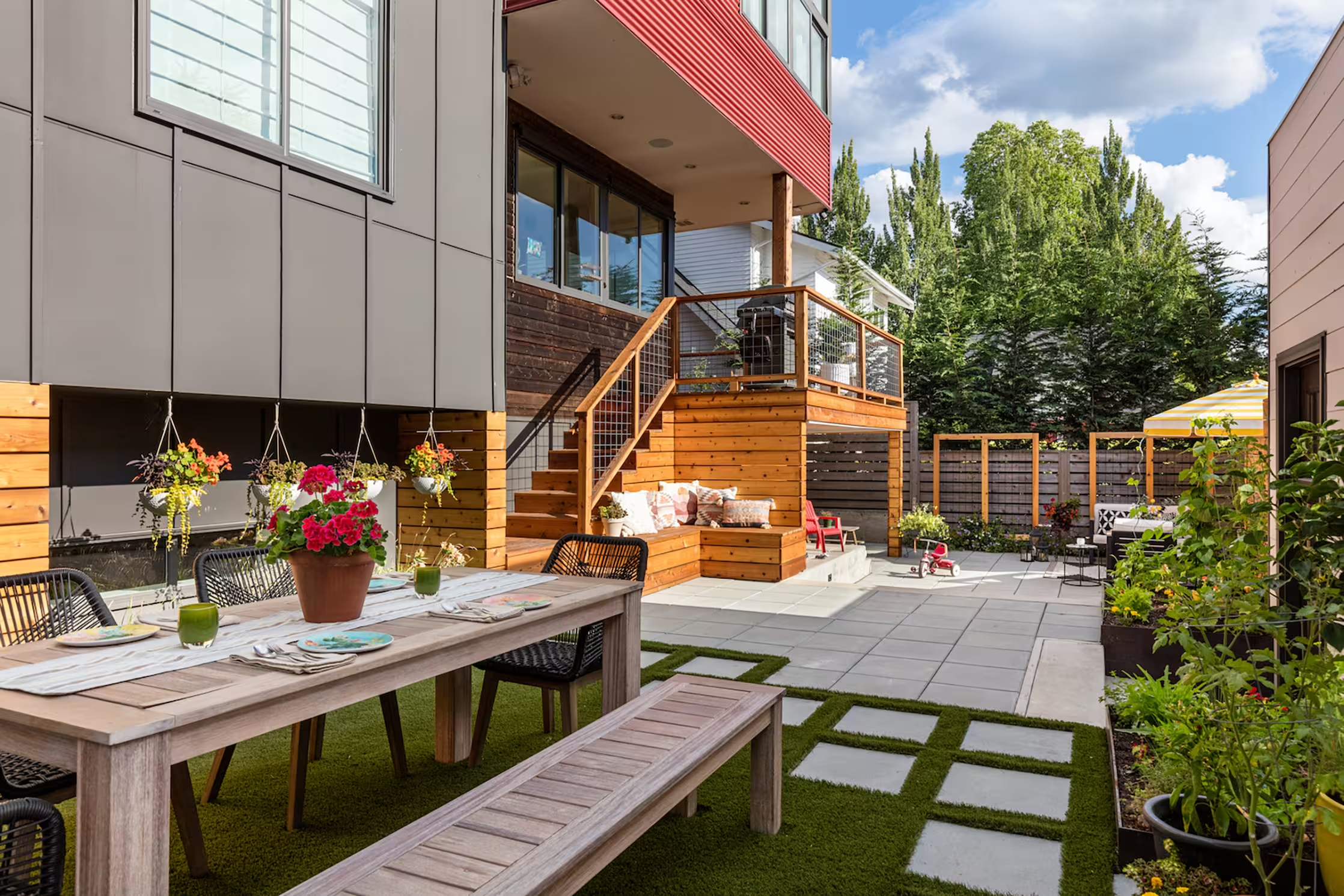
We love creating built-in furniture, because in the small yards of Seattle it really helps optimize the space. A dedicated, well-conceived dining area takes up less room than a freestanding set, which frees the rest of the yard for play, vegetables, or ornamental plants. It opens a lot of avenues.
Small smart spaces are one of our specialties:
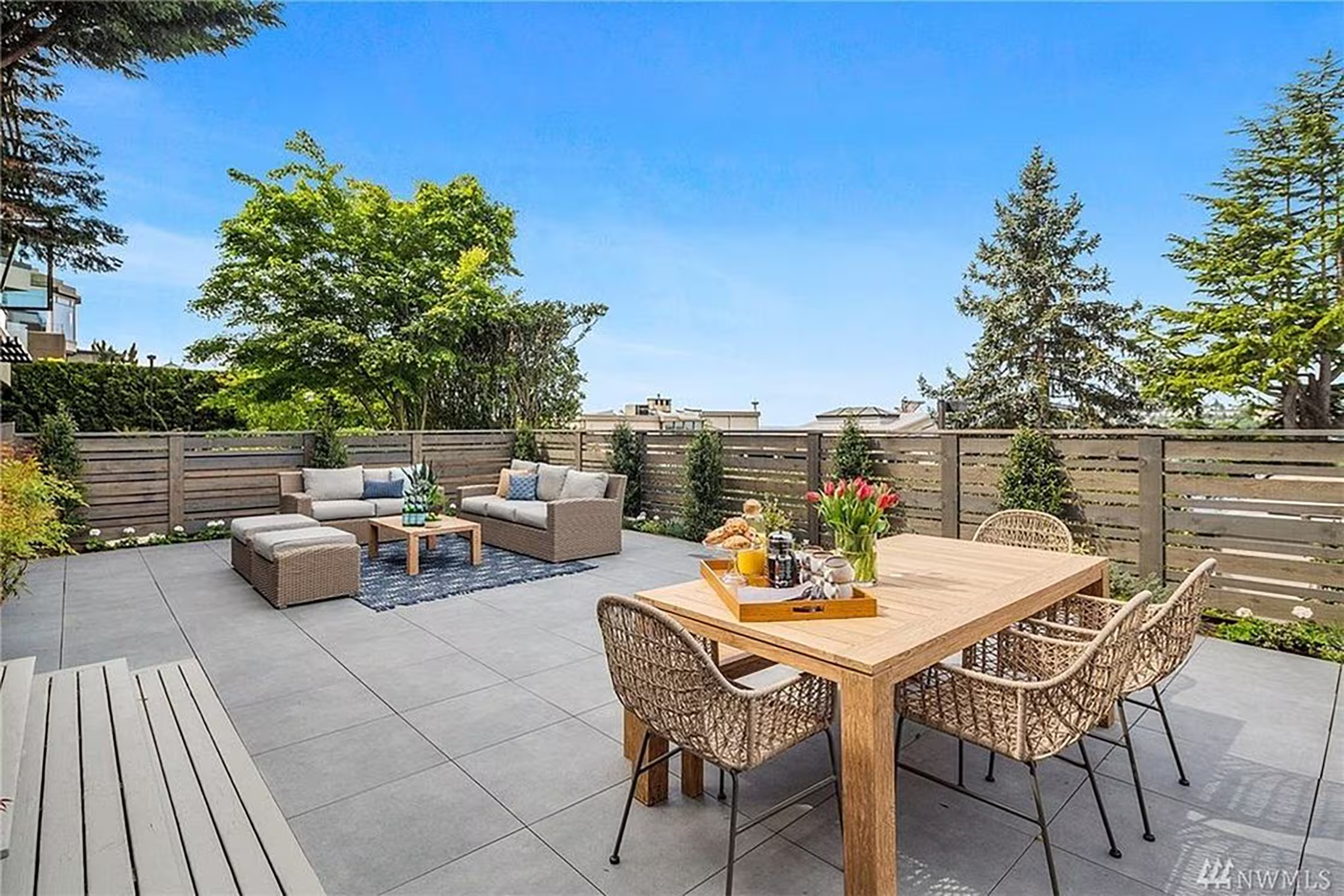
Sometimes we design the complete opposite: big, versatile spaces that change as family needs change over the years.
Right now a space might hold a sand pit and a water table for the kids. In a few years it’s a ping pong table. One day it’s a sofa and a fire pit. Designing for that progression means the yard doesn’t need to be rebuilt every time the family moves into a new phase.
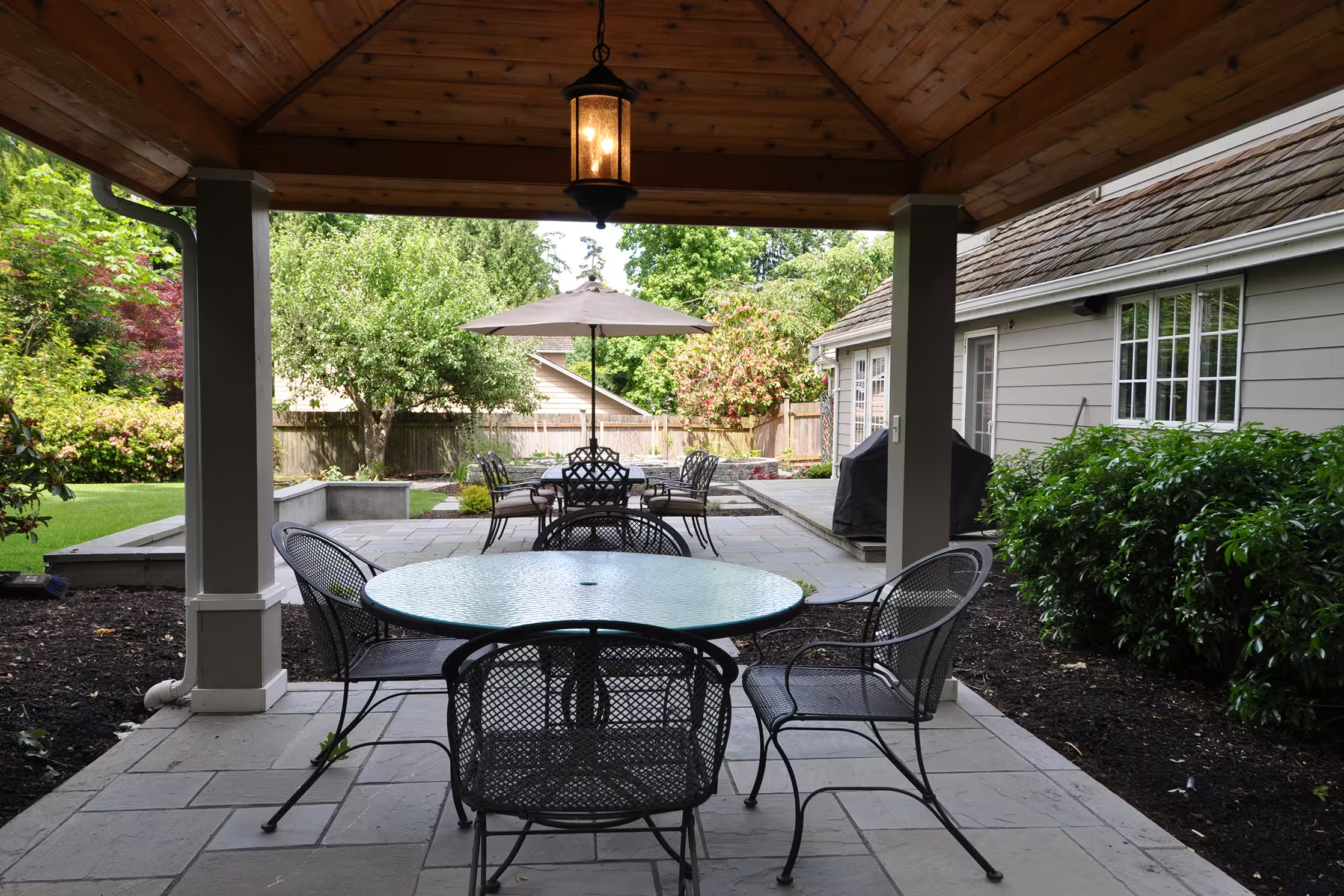
We also pay close attention to how spaces relate to each other. Dining spaces connected to evening spaces. Dining spaces in view of the play areas, so parents can sit and work — or fold laundry — while the kids play where they can see them.
Some of our favorite layouts work like an open floor plan inside a house. The dining table can move anywhere. The play space doubles as lawn. Someone can be reading a book while another person is in the veggie garden and a third is cooking. Nothing is walled off from anything else, so the space stays versatile year after year.
Examples of Our Outdoor Dining Work
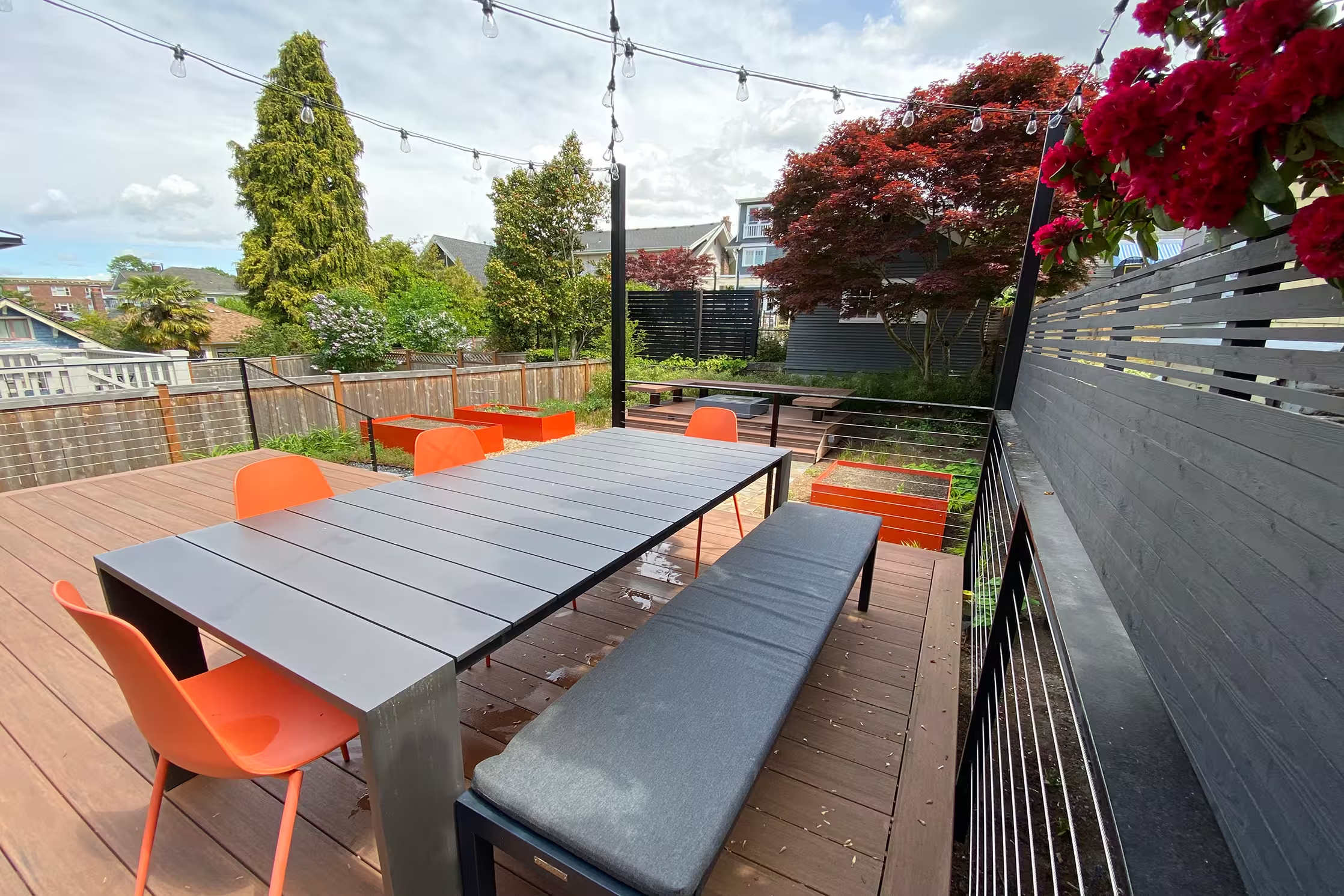
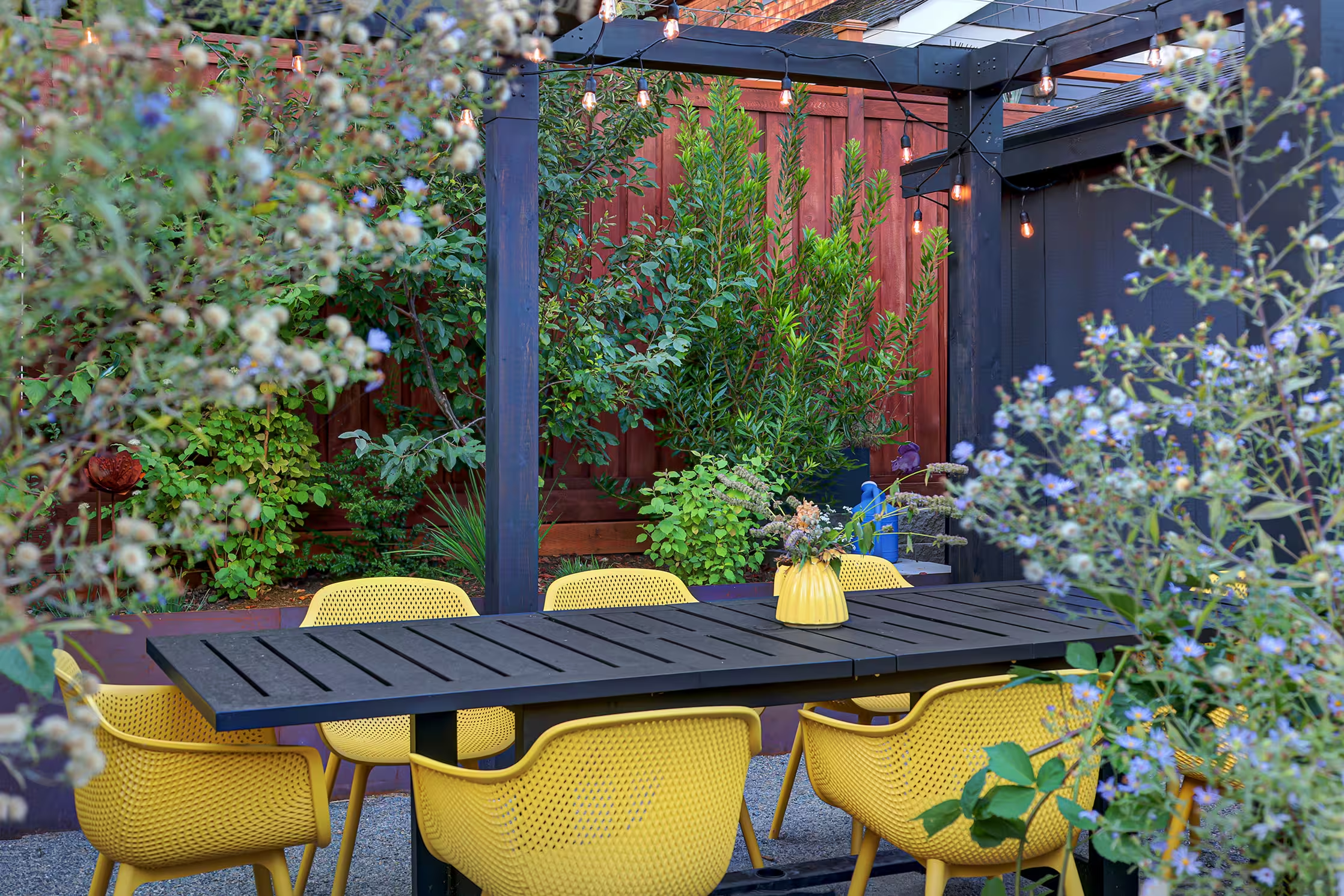
The one that keeps coming up for us is a nature-immersed dining space in a small yard, separated into a series of outdoor rooms so that reaching the table feels like arriving at a destination.
The clients asked for it specifically. They work in office buildings — surrounded by concrete and windows and paper and screens all day — and they wanted to come home and breathe fresh air. Plants transpire oxygen, so the space is genuinely oxygen-rich, and it has hummingbirds and butterflies and honeybees buzzing around you the entire time you’re sitting in it. We’ve gotten a lot of good feedback from those clients.
That project also shows what we’d call an open implied shelter: a framework overhead that makes you feel like you’re inside a structure, but with no walls or ceiling. It doesn’t give you cover from rain, but with all the plants growing through it, it provides real coolness on hot summer days.
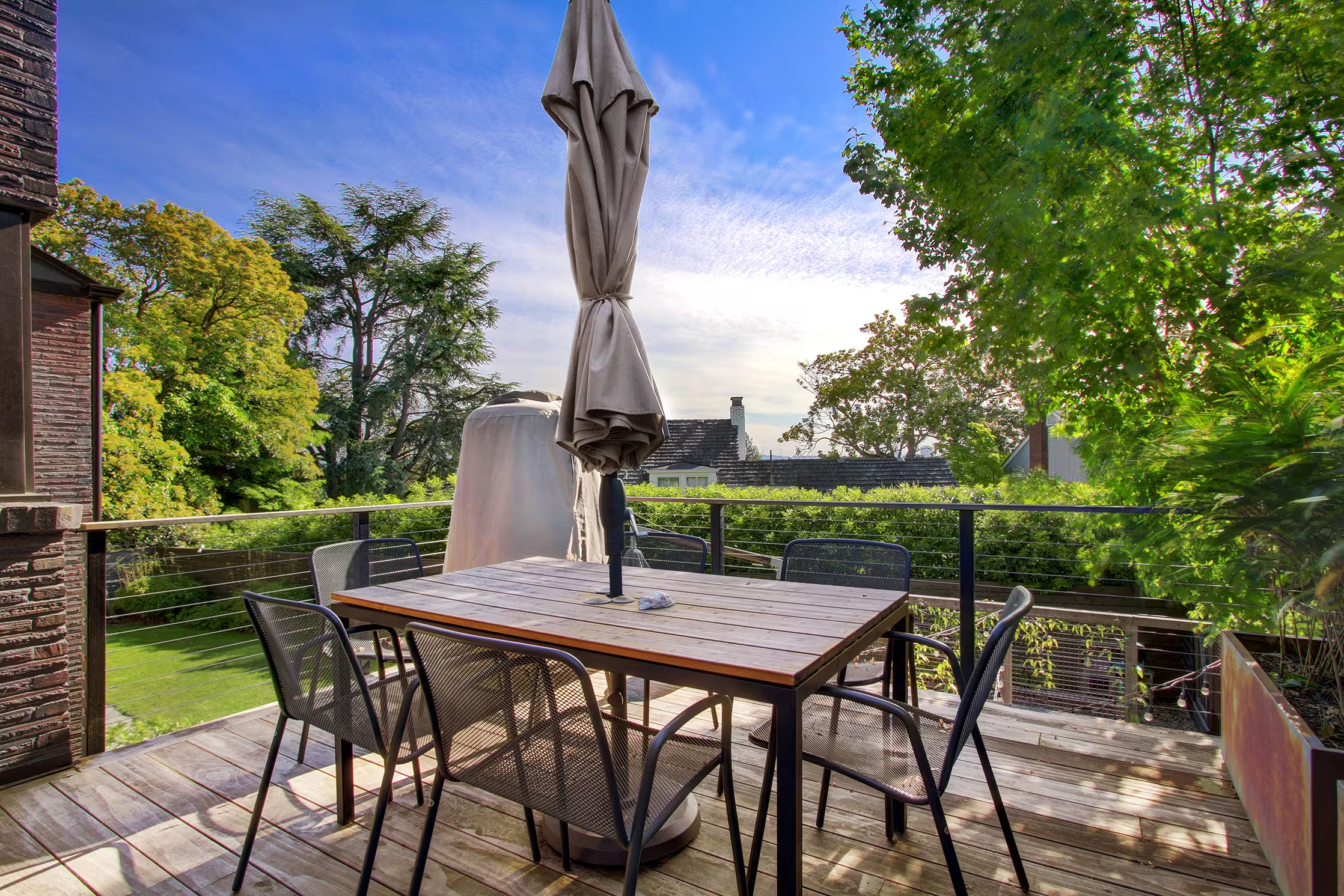
Not enough room around the table. This is the number one thing. A lot of designers don’t factor in the space needed to walk around a table and pull a chair out. We show up at places where the chairs are almost falling off the deck and you have to shuffle sideways to get past.
Ignoring the sun. Dining spaces often get placed in a spot that gets blasted by the western sun in the evening — exactly when people want to eat there.
Comfortable and safe sound like low bars, but those two misses account for most of the dining spaces that go unused.
How much space do I need around an outdoor dining table?
Enough to pull a chair fully out and walk behind it comfortably. Not accounting for that clearance is the most common mistake we see — it’s why so many decks have chairs teetering on the edge.
Is built-in furniture worth it for a small yard?
Usually yes. Built-ins fit more seating into less square footage, which frees the rest of a small Seattle lot for play, planting, or open lawn.
Where’s the best place to put an outdoor dining area?
Somewhere comfortable at the hour you’ll actually eat. Western exposure gets blasted in the evening, so shade or screening matters. Sightlines to play areas are worth planning for if you have kids.
Can an outdoor dining space work for both kids and adults?
That’s often the best design. We build versatile spaces that hold a sand pit now, a ping pong table later, and a sofa and fire pit eventually — and we keep the dining area in view of the play area.
Do I need a roof over my outdoor dining space?
Not always. An open implied shelter — an overhead framework with no walls or ceiling — gives you the feeling of being in a room and real shade from plantings, without the cost or the light loss of a full roof.
What makes a dining space feel immersed in nature?
Enclosure by plants rather than structures, separation into smaller outdoor rooms, and planting for pollinators so there’s actual life moving through the space while you eat.